Select Language:
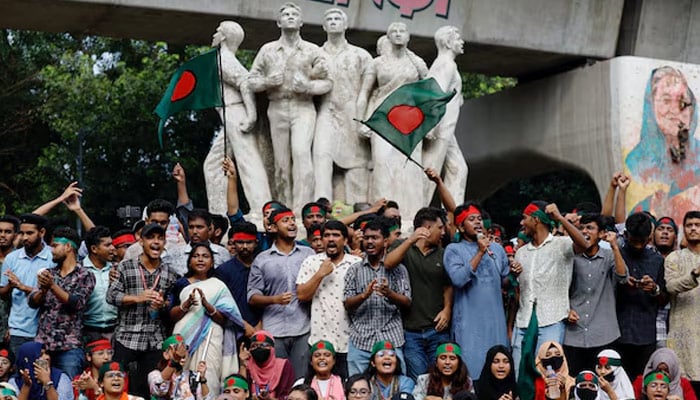
Protesters from the Anti-Discriminatory Student Movement gathered at the University of Dhaka’s Teacher-Student Center, demanding the death penalty for former Bangladeshi Prime Minister Sheikh Hasina due to student fatalities during anti-quota protests on August 13, 2024. — Reuters
– Law enforcement officials have identified the suspects involved in the murder of student leader Sharif Osman Hadi.
– Bangladesh has requested assistance from India regarding Hadi’s killing.
– Nationwide protests have intensified following the death of the student leader.
Bangladesh authorities announced Sunday that the prime suspects in the killing of popular student figure Sharif Osman Hadi had escaped to India, further straining diplomatic ties. Hadi, a vocal critic of India who participated in last year’s mass uprising, was shot by masked assailants in Dhaka earlier this month and later died in a Singapore hospital.
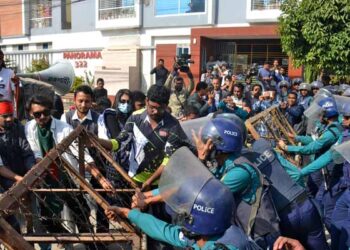
His death triggered widespread unrest, with mobs torching several buildings, including two major newspapers believed to be pro-India outlets, as well as a prominent cultural institution. With daily protests ongoing across the country, pressure is mounting on the interim government to apprehend the killers, especially since Hadi was expected to run in next February’s general elections.
“The murder was premeditated, and the suspects have been identified,” stated SN Nazrul Islam, a senior officer with Dhaka Metropolitan Police, during a press briefing. Islam noted that Faisal Karim Masud and Alamgir Sheikh left Bangladesh through the Haluaghat border into India shortly after the attack on December 12. They were met by two Indian nationals who escorted them into Meghalaya before turning them over to accomplices.
Bangladeshi investigators are in contact with Indian authorities, who have detained the two suspects’ accomplices. Authorities from Meghalaya confirmed the arrest of the two Indian nationals, though officials declined further comment when contacted. India previously denied involvement in Hadi’s death, rejecting “false narratives” about its role.
Relations between India and Bangladesh have deteriorated since Sheikh Hasina’s ouster, with Bangladesh seeking her extradition after her sentencing in absentia for crackdowns during the uprising. Recent tensions also flared after a mob lynched a Hindu garment worker on December 18. Amid increased security concerns, Khuda Baksh Chowdhury, a top aide to Bangladesh’s interim leader Muhammad Yunus overseeing internal security, resigned on Wednesday.
 ChatGPT
 Perplexity
 Gemini AI
 Grok AI