
Select Language:
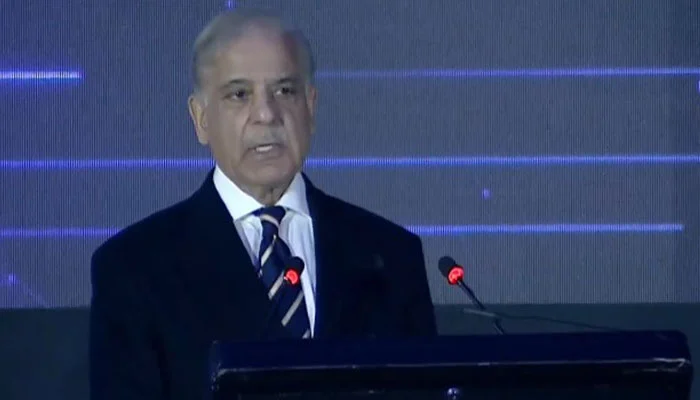
Prime Minister Shehbaz Sharif announced that Pakistan is planning to invest $1 billion in artificial intelligence by 2030 to foster a national AI ecosystem. He emphasized that the country is ready to participate in the upcoming technological advancements. Speaking at the opening of Indus AI Week 2026, attended by government officials and international delegations from Saudi Arabia, Turkey, and others, he detailed several initiatives.
The government will introduce an AI curriculum across all federal schools, as well as in educational institutions in Azad Jammu and Kashmir, Gilgit-Baltistan, and remote regions of Balochistan, aiming to prepare youth for future leadership roles in the digital economy. Additionally, 1,000 fully funded PhD scholarships in AI will be awarded nationwide by 2030 to strengthen research capacity and develop top-tier research centers.
A comprehensive program will be launched to train one million non-IT professionals in AI skills, enhancing productivity and economic prospects. Priority sectors for AI deployment include agriculture, mining, and youth empowerment, especially considering Pakistan’s large youth demographic, which makes up nearly 60% of the population of approximately 240 million.
The Prime Minister described this gathering as a pivotal moment for Pakistan’s technological future, promising a “game-changing” collaboration with partner nations. Reflecting on past reforms, he highlighted initiatives like large-scale laptop distributions, introduction of e-libraries in remote areas, digital land record management in partnership with the World Bank, and the establishment of Lahore’s first Safe City project and IT university.
Shehbaz assured that Pakistan is now positioned to leap into AI development with comprehensive national measures. He reassured IT industry professionals and startups that they should not fear rapid AI changes, as government programs will facilitate the transformation of IT specialists into AI experts. The adoption of AI is expected to boost agriculture, industry, trade, innovation—particularly among women—and the broader economy.
He also highlighted ongoing digital reforms, such as modernizing the Federal Board of Revenue to improve efficiency, cracking down on smuggling with advanced scanning technologies, and recovering lost revenue through digital platforms. The government is committed to providing top-tier training in key sectors like agriculture and commerce, supporting the country’s economic growth.
Shehbaz concluded that Pakistan faces challenges ahead but remains determined to advance on its path, aiming for a respected position among nations through continued progress and innovation.
 ChatGPT
 Perplexity
 Gemini AI
 Grok AI