Select Language:
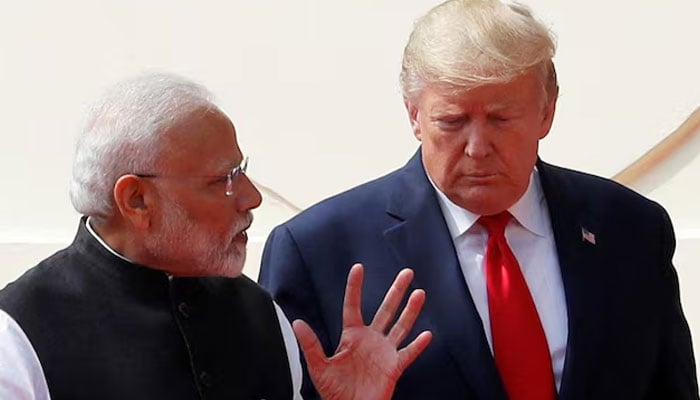
Indian Prime Minister Narendra Modi is expected to meet President Donald Trump next month during his visit to the United States to participate in the upcoming UN General Assembly, according to sources cited by the Indian Express on Wednesday.
India’s foreign ministry has not yet issued an official response to the inquiry. A government official familiar with the plans mentioned that no final decision has been made, noting that countries typically reserve slots for the General Debate at the assembly. This is why India’s “head of government” appears on a tentative list scheduled for September 26.
“The list is subject to revisions,” the official added, indicating that it remains undecided whether Modi will attend the UNGA.
The General Assembly opens on September 9, with the high-level debate taking place from September 23 to 29. While Modi’s visit is primarily to attend the UN event in New York, a significant goal for him will be to engage in dialogue with Trump to address ongoing trade and tariff disputes, which have caused some strains in their relationship, the report indicated.
Recent days have seen the announcement of a 25% tariff imposed by Trump on Indian goods, intended as a penalty against India for continuing its purchase of Russian oil. This move brought the total tariffs on Indian exports to the US up to 50%, making them some of the highest among U.S. trading partners.
Trade negotiations between India and the US broke down after five rounds, largely over disagreements related to opening India’s large agricultural and dairy sectors and stopping Russian oil imports. On Tuesday, US Treasury Secretary Scott Bessent remarked that several major trade agreements, including deals with Switzerland and India, remain in limbo. He said that India had been somewhat resistant during talks but expressed hope that the Trump administration could finalize its trade negotiations by the end of October.
Bessent told Fox Business Network’s “Kudlow” that while it’s an aspirational timeline, the US is optimistic, believing substantial agreements can be reached with key countries during that period.
 ChatGPT
 Perplexity
 Gemini AI
 Grok AI