Select Language:
A group of UN investigators assigned to examine incidents of violence committed by Israeli settlers and the transfer of weapons to Israel for the Gaza conflict are unable to complete their work due to funding shortages, according to a document. This situation highlights how declining donor contributions and cost-cutting measures within the UN system are undermining efforts to hold perpetrators accountable for abuses, with a Congo investigation earlier this year being halted for similar reasons.
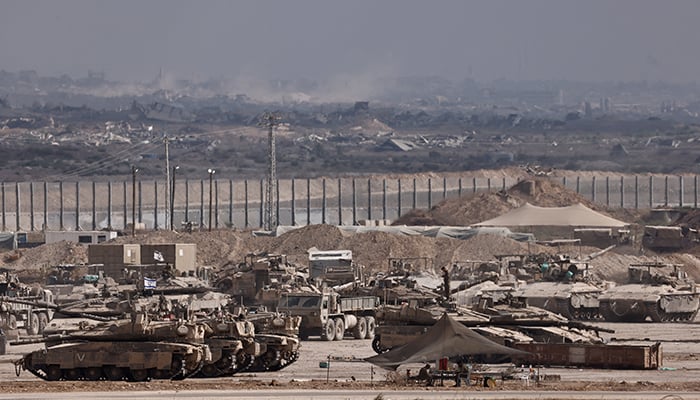
The Independent International Commission of Inquiry on the Occupied Palestinian Territory, established in May 2021 by the Geneva-based Human Rights Council, is capable of gathering evidence of international crimes that can be used in preliminary investigations by courts such as the International Criminal Court. Last year, the council approved a request from Pakistan to gather additional evidence relating to arms transfers to Israel amid the Gaza war and Israeli settler violence.
However, Navi Pillay, who leads the inquiry, told the council’s president in an August 6 letter that insufficient funds prevent the team from hiring additional staff. “The Commission has begun informing sponsors of the two resolutions that it will be unable to produce these mandated reports and present them to the Council in March 2026,” said Pillay, a former ICC judge and ex-UN High Commissioner for Human Rights.
Israel frequently criticizes the commission, which has condemned actions by the Israeli military since its renewed Gaza offensive following the deadly Hamas attacks on October 7, 2023. Meanwhile, unpaid mandatory dues to the UN, including approximately $1.5 billion owed by the United States—the organization’s largest donor—have worsened an ongoing liquidity crisis. As a result, the UN plans to reduce its overall budget by 20%.
Currently, 12 of the 47 voting members of the Human Rights Council—scheduled to convene in September to address crises in Sudan and Afghanistan—are behind on their dues, according to the International Service for Human Rights. Deputy High Commissioner Nada Al Nashif stated that investigations are operating at roughly half their staffing capacity. “Without timely funding, implementation becomes more limited, and in some cases, tasks cannot be completed at all,” she warned.
 ChatGPT
 Perplexity
 Gemini AI
 Grok AI