
Select Language:
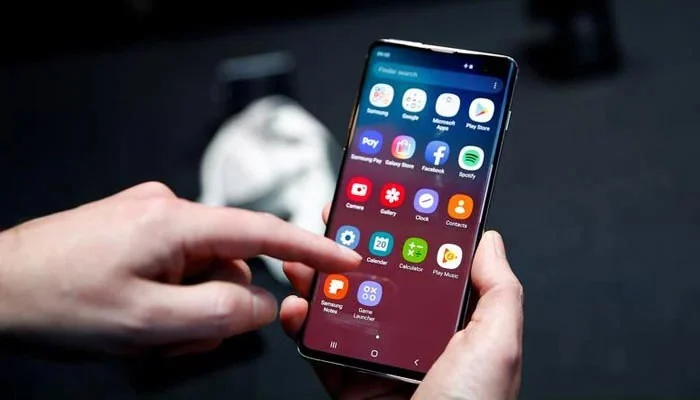
The National Assembly’s Standing Committee on IT and Telecom received information that the government is planning to introduce a new app called “Beep” for officials sometime soon. This app is designed to be similar to China’s popular social media platform WeChat.
During a meeting led by MNA Syed Amin Ul Haque on Tuesday, the committee was told that the app is already developed and is expected to be launched by June 2026. Faisal Iqbal Ratyal, CEO of the National Information Technology Board (NITB), explained that the main goal of Beep is to provide a secure messaging platform specifically for government employees.
Beep features end-to-end encryption for video calls, making it suitable for sensitive government communications. When asked about the costs involved, Ratyal noted that Beep will operate on a usage-based fee system and that steps are being taken to make the platform financially sustainable over the long term. He emphasized that revenue generation is not the primary focus; instead, the priority is to ensure secure, efficient, and dependable communication across government institutions.
Currently, WhatsApp, owned by Meta, is the most widely used app for voice, video calls, and media sharing in Pakistan. However, its data servers are not located within the country. The committee chair criticized the Pakistan Telecommunication Authority’s (PTA) report claiming 99% satisfaction with mobile signals nationwide, stating that frequent internet slowdowns and weak signals contradict the report. Members agreed that the report lacked credibility.
Sharmila Faruqui of PPP questioned the methodology PTA uses for these surveys and called for future assessments to be conducted by independent third parties to enhance credibility and transparency. The committee also revisited previous directives to conduct the 5G spectrum auction in Pakistani rupees and to set spectrum prices reasonably, linking any discounts during the auction to improvements in network infrastructure.
The committee expressed concern over the absence of the Director General of SCO for the third straight time. It discussed the proposed Prevention of Obscenity and Indecency in Digital Media Bill, 2025, introduced by Shahida Rehmani. The National Cyber Crime Investigation Agency (NCCIA) opposed the bill, arguing that existing laws, specifically the Prevention of Electronic Crimes Act (PECA), already cover digital media issues, making a new law redundant and risking overlap.
Acknowledging NCCIA’s stance, Rehmani withdrew her bill and was instructed to collaborate with NCCIA to identify any gaps or additional provisions needed in existing legislation, ensuring no unnecessary fragmentation in legal authority and effectively addressing digital media-related crimes.
 ChatGPT
 Perplexity
 Gemini AI
 Grok AI