Select Language:
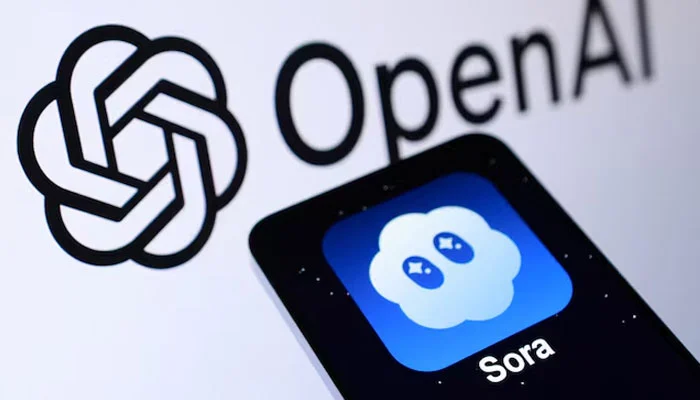
On Monday evening, the Walt Disney Company and the OpenAI teams were collaborating on a project related to Sora, OpenAI’s AI-powered video tool. Just half an hour after that meeting, the Disney team was caught off guard when they learned that OpenAI was discontinuing the tool entirely, according to someone familiar with the situation. OpenAI made the announcement publicly on Tuesday.
“It was a real gut punch,” the individual, who asked not to be named, said. This move marks the first significant shift by the creators of ChatGPT to realign its business focus toward potentially more profitable sectors like coding tools and enterprise clients.
However, the sudden cancellation of Sora highlights the possible complexity and messiness involved in OpenAI’s streamlining efforts, as the company prepares for a potential stock market launch expected later this year.
The decision to cancel Sora also means ending a major deal between Disney and OpenAI, valued at over $1 billion, announced just a little over three months ago. Under that three-year agreement, Disney committed to investing a billion dollars into OpenAI and lending more than 200 of its beloved characters for use in short, AI-generated videos. Nonetheless, sources say that the deal was never finalized, and no funds exchanged hands.
OpenAI leadership had been debating Sora’s future for some time. Running the AI video platform required substantial computing power, which limited other teams’ resources, according to an additional source. Despite the challenges, some OpenAI staff working on Sora were surprised when they learned of its cancellation on Tuesday morning, especially since the company had just published a blog post outlining safety standards for the platform the day before.
The Sora team acknowledged the news on social media, saying, “We’re saying farewell to Sora… We understand this may be disappointing.” They promised to share more information about the app’s timeline, API access, and ways to save user work later.
OpenAI is now shifting its focus toward other areas like robotics and the development of artificial general intelligence. The company is consolidating many of its capabilities into a single, all-encompassing super-app. In line with this transition, Fidji Simo’s role was updated from CEO of applications to CEO overseeing AGI deployment. Additionally, CEO Sam Altman announced that OpenAI’s security and safety teams will now report separately from him.
A Disney spokesperson expressed respect for OpenAI’s decision, stating, “We acknowledge OpenAI’s choice to exit the video generation space and refocus its efforts elsewhere.” The companies are still exploring whether there are alternative ways to collaborate or invest together.
Initially introduced in early 2024, Sora amazed the tech world by producing high-quality, feature-film-like videos based on simple text prompts. Its launch prompted a surge in similar AI video-generation tools from other developers both in the U.S. and China.
In September 2025, OpenAI released Sora as a standalone app that allowed users to create and share AI-generated videos, leveraging copyrighted content and social media platforms. However, the cancellation comes amidst increased pressure for OpenAI to expand its enterprise and coding products, facing stiff competition from emerging startups and major tech giants.
For example, Anthropic has gained traction with its focus on training models for coding, boosting its Claude Code product’s popularity among developers and giving the company an advantage in the enterprise AI space compared to OpenAI and others.
 ChatGPT
 Perplexity
 Gemini AI
 Grok AI