Select Language:
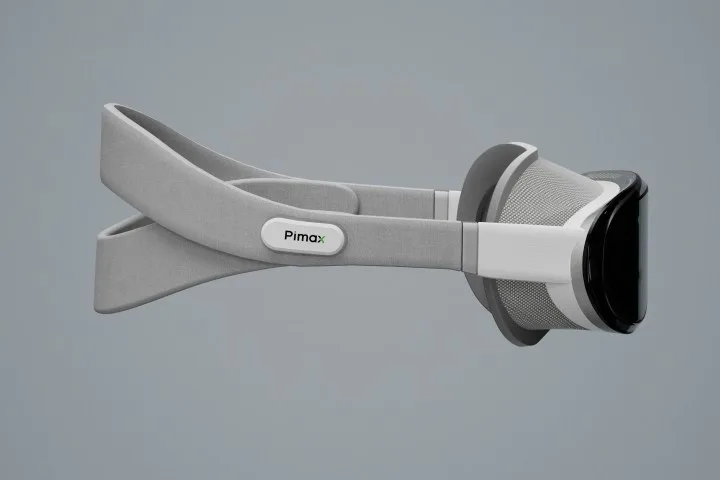
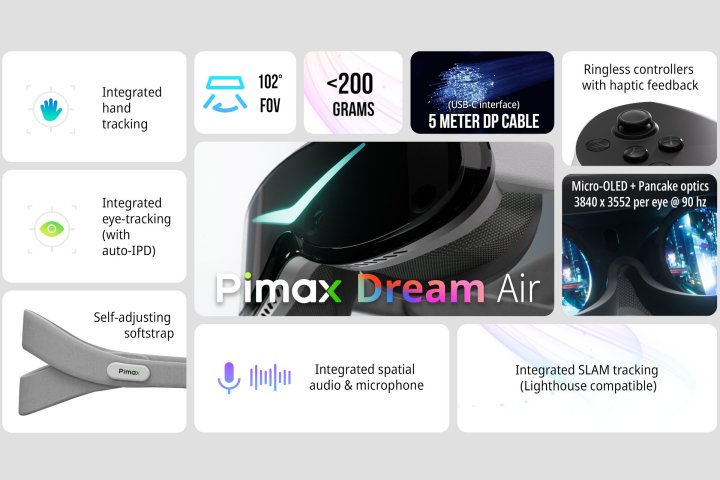
Pimax has just unveiled a lightweight PC VR headset that weighs under 200 grams and features stunning 4K microOLED displays for each eye, paired with pancake lenses. This means the Pimax Dream Air offers comparable display specifications to Apple’s Vision Pro but is lighter than an iPhone 16 Pro.
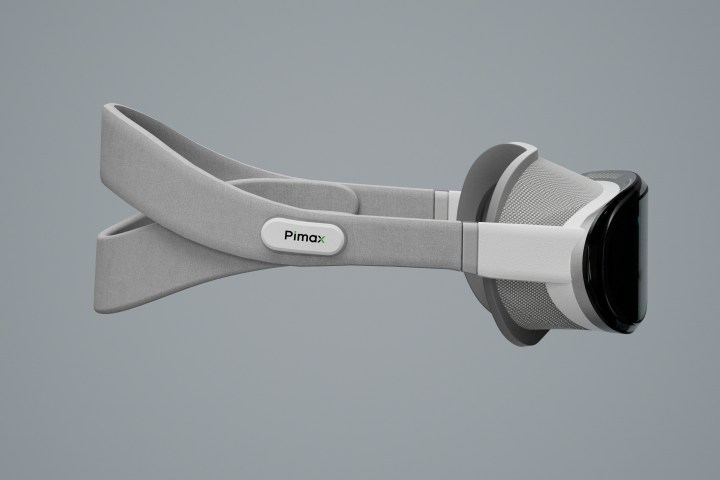
The design of the Dream Air is reminiscent of the Vision Pro, suggesting that Pimax took cues from Apple’s aesthetic. The images reveal a sleek, curved headset equipped with a single rear strap that cradles the back of the head.
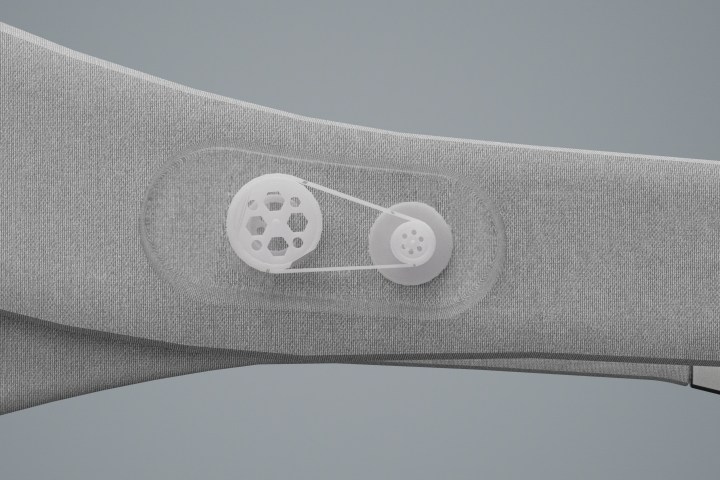
Pimax claims the strap automatically adjusts for a snug fit, and there’s auto lens spacing to align perfectly with your eyes. This feature is essential, as the Pimax Dream Air includes eye-tracking capabilities.
This feature allows the Dream Air to be easily shared among users, unlike the Vision Pro, which necessitates a face scan for a proper fit before purchase.
Pimax has built a reputation for developing high-end PC VR headsets that often come with heavy and cumbersome headsets that require a VR-ready PC. However, the Dream Air represents a shift in Pimax’s approach, potentially reshaping our expectations.
Like the Pimax Crystal and the $800 Crystal Light, the Dream Air is expected to deliver top-notch performance when connected to a Windows PC with a robust graphics card. It connects with a 5-meter USB-C cable, necessitating a computer capable of supporting DisplayPort over USB.
Boasting a resolution of 3840 × 3552 pixels per eye at 90Hz, the headset presents a challenge for older GPUs. Nonetheless, Pimax has incorporated foveated rendering and upscaling techniques to alleviate some of the performance demands. While detailed system specifications are not yet available, a powerful gaming PC will undoubtedly be essential.

The Pimax Dream Air is equipped with inside-out tracking, eliminating the need for external base stations. Additionally, Pimax has introduced new controllers devoid of rings, resembling the Touch Plus controllers that come with Meta’s budget-friendly Quest 3 and 3S. Users can also take advantage of hand-tracking, making it possible to use the headset without controllers for certain games.
Pimax has also introduced an optional Cobb compute puck, powered by a Qualcomm Snapdragon XR2 chip. It’s yet to be confirmed whether it will feature the original XR2 or the newer Snapdragon XR2 Gen 2 found in the Quest 3 and 3S. When connected to the Dream Air, users should be able to access certain functionalities without the need for a PC.
This feature could be particularly beneficial while traveling, as it may allow for video playback or casual gaming and browsing. However, details regarding pricing and complete specifications for Cobb remain undisclosed.
In summary, the Pimax Dream Air presents itself as a fascinating PC VR gaming headset packed with impressive features in a compact and remarkably lightweight design. The added potential for mobile usage with the Cobb accessory enhances its appeal, suggesting it may become one of the leading VR headsets on the market.
Pimax has announced that the Dream Air will begin shipping in May 2025. With only five months before this timeline, the company must act swiftly to meet this commitment. Given Pimax’s history of product shipping delays, it wouldn’t be unexpected if the Dream Air’s release ends up being pushed back to later in the year.
The Pimax Dream Air is currently available for preorder on Pimax’s official website, priced at an attractive $1,895 ($1,199 for the preorder and $697 due upon shipping). Additionally, purchasers have the option for a 14-day trial period after receiving the headset, allowing for a full refund if they are not satisfied.
 ChatGPT
 Perplexity
 Gemini AI
 Grok AI