Select Language:
Russia and the United States have effectively lost all binding limits on their strategic nuclear arsenals following the expiration of the last arms control agreement, with no new accord reached. The New Start treaty, which historically imposed restrictions on each country’s deployed missiles, launch platforms, and strategic warheads, was the final in a series of nuclear agreements that spanned over 50 years, dating back to the Cold War era.
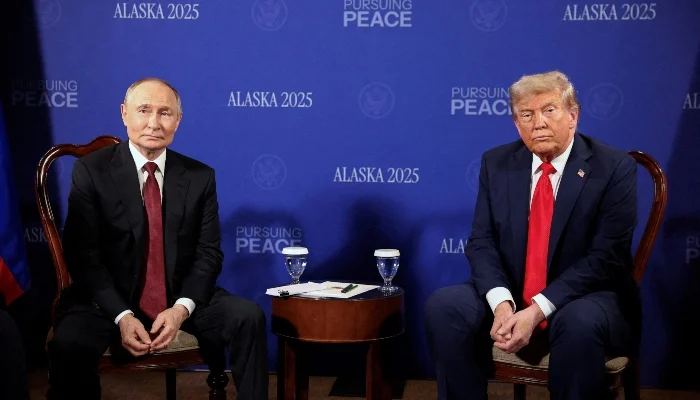
Experts warn that without these treaties, the risk of a new arms race increases, especially as China rapidly expands its nuclear capabilities. Russian President Vladimir Putin suggested extending the treaty’s key terms for an additional year, but U.S. President Donald Trump did not respond formally. Trump has indicated he seeks a more comprehensive deal, ideally including China, which opposes negotiations due to its comparatively small arsenal of roughly 600 warheads versus approximately 4,000 each for Russia and the US.
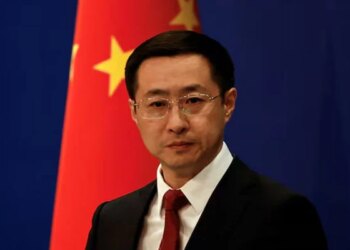
In a statement issued just hours before the treaty’s lapse, Russia criticized the U.S. approach as “misguided and unfortunate,” asserting that Russia now assumes the treaty no longer applies, leaving both nations free to determine their next moves. Moscow emphasized its readiness to counteract potential threats to national security with military-technical measures yet expressed willingness to pursue diplomatic solutions for stabilizing strategic relations.
President Trump did not make any remarks as the arms control treaty expired. The White House announced that he would independently decide the future direction of nuclear arms negotiations, with clarification of his stance expected at a later time.
Strategic nuclear weapons refer to long-range systems intended for targeting the adversary’s capital and key military and industrial centers in the event of nuclear conflict. These differ from tactical nuclear weapons, which have lower yields and are designed for limited, battlefield use.
Without a stabilization framework, analysts fear each side will struggle to interpret the other’s intentions, potentially leading to an escalation cycle where both nations increase their arsenals based on worst-case scenarios. Experts estimate that within a few years, both Russia and the U.S. could deploy hundreds more warheads beyond the current limit of 1,550 under New Start.
Karim Haggag of the Stockholm International Peace Research Institute highlighted that transparency and predictability—core benefits of arms control—are crucial for deterrence and stability. Their absence could make international relations more prone to crises, especially with emerging technologies like artificial intelligence complicating escalation pathways and reducing diplomatic communication channels between the US, China, and Russia.
UN Secretary-General Antonio Guterres expressed concern, stating that the collapse of decades of arms control achievements comes at an especially dangerous time, with the likelihood of nuclear weapon use at its highest in decades. He called on Russia and the US to restart negotiations immediately to establish a new framework that enforces verifiable limits, minimizes risks, and enhances global security.
 ChatGPT
 Perplexity
 Gemini AI
 Grok AI