Select Language:
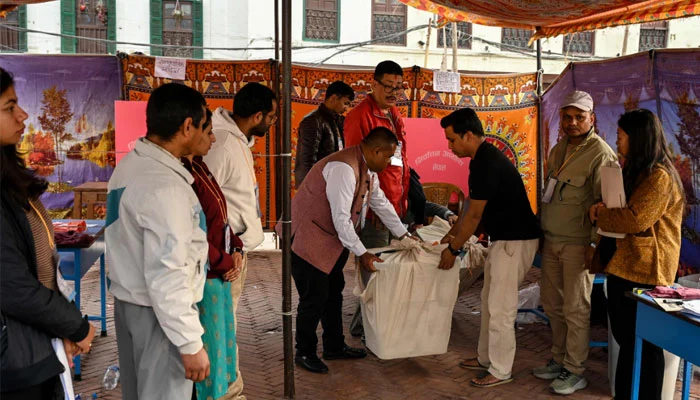
Nepal’s latest parliamentary election took place amid the aftermath of protests that led to the government’s overthrow in 2025. Counting is currently in progress, with initial results anticipated later today, though a complete count might take several days. The process has been peaceful, according to Election Commission spokesperson Prakash Nyupane, but the political landscape remains tense as parties await the final tally.
Voters selected representatives to replace the interim government, which had been in place since a violent uprising last September that left at least 77 dead and resulted in widespread destruction of government buildings. The protests, initially sparked by a social media ban, evolved into a larger movement fueled by frustrations with corruption and a struggling economy.
The vote is among the most fiercely contested in Nepal since the end of its civil war in 2006. Prominent candidates include a former prime minister with Marxist roots aiming to make a political comeback, a young rapper turned mayor appealing to the youth, and the newly elected leader of the Nepali Congress party.
Polling stations reported a calm atmosphere, with thousands of security personnel deployed to maintain order. Key results are being watched closely in a regional district called Jhapa-5, where the main contenders face off. One challenger, KP Sharma Oli—ousted last year as prime minister—is seeking to regain power. He’s facing off against Balendra Shah, a 35-year-old rapper-turned-politician representing a centrist party, who is rallying young voters as a symbol of change. Gagan Thapa, leader of Nepal’s oldest party, also remains in the race, promising to bring fresh leadership.
Over 3,400 candidates competed for 165 seats directly elected to the 275-member House of Representatives, with additional members chosen through party lists. Voter turnout reached nearly 60%. Many voters expressed hope that the election would produce a leader capable of guiding Nepal toward stability and progress, especially after recent sacrifices and decades of political upheaval.
As the vote count continues, political analysts warn that forming a cohesive government might take time, especially if no single party secures a majority. The nation watches nervously, hopeful for a new path forward.
 ChatGPT
 Perplexity
 Gemini AI
 Grok AI