Select Language:
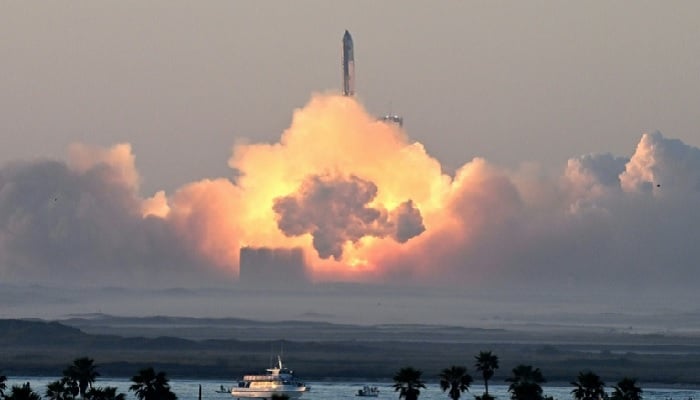
Elon Musk’s SpaceX announced on Friday that its massive Starship rocket is set to undertake a new test flight next weekend, following previous attempts that resulted in fiery explosions. This colossal and most potent launch vehicle ever built aims to bring Americans back to the Moon and plays a key role in Musk’s vision of colonizing Mars—a goal held by the world’s richest person.
However, repeated mishaps—including debris falling over Caribbean islands and causing flight disruptions—have increased pressure on SpaceX to execute a smoother and more controlled test. The tenth test flight of Starship is scheduled to launch as early as August 24 from the company’s Starbase facility in Texas, according to the company’s website.
Earlier tests this year saw the rocket’s upper stage—designed to carry crew and cargo—ignite in flames shortly after liftoff. In the last test in late May, Starship reached space but ultimately exploded due to a fuel leak that caused a loss of control. The rocket’s intended splashdown in the Gulf of Mexico was also thwarted when it disintegrated before reaching the water.
Standing at 403 feet (123 meters) tall, this black-and-white giant is engineered to be fully reusable and to facilitate relatively low-cost launches. SpaceX continues to rely on its “fail fast, learn fast” strategy, which has propelled it to dominate commercial spaceflight, hoping the same approach will lead to success with Starship.
Nevertheless, recent setbacks—including an explosion during a routine ground test in June—have raised doubts about the rocket’s progress. Musk remains optimistic, insisting the rocket will launch its first uncrewed missions to Mars next year.
Criticism has grown regarding the environmental and community impact of SpaceX’s launches. Mexican President Claudia Sheinbaum even threatened legal action over debris and contamination risks stemming from the company’s activities.
Upcoming months are expected to bring further tests of Starship, especially after U.S. aviation regulators approved increasing the permissible number of annual launches from five to 25.
 ChatGPT
 Perplexity
 Gemini AI
 Grok AI