
Select Language:
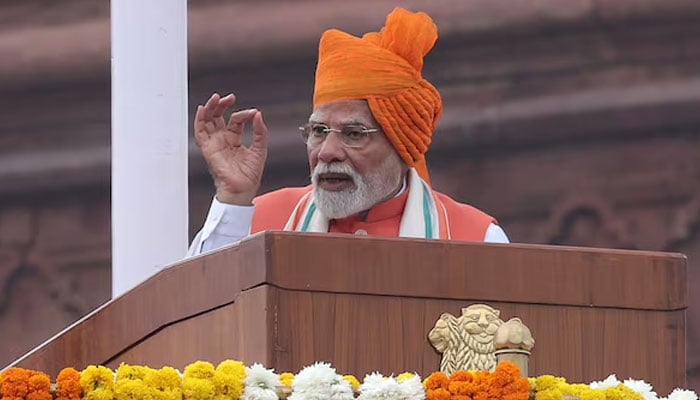
India’s Prime Minister Narendra Modi delivered a national address during Independence Day celebrations at the historic Red Fort in Delhi on August 15, 2025. — Reuters
– Modi reveals the most significant tax reform in eight years
– This move may boost consumer spending but could reduce tax revenue
– Seen as a strategic move to strengthen his standing in trade disputes and domestic politics
NEW DELHI: India’s Prime Minister Narendra Modi has introduced the most comprehensive tax cuts in nearly a decade, potentially straining government income yet earning praise from businesses and political analysts who believe it will enhance his image amid ongoing trade tensions with Washington.
In the largest tax overhaul since 2017, Modi’s administration announced on Saturday a series of sweeping changes to the complex goods and services tax (GST) system, set to lower prices on essential goods and electronics starting in October.
Meanwhile, during his Independence Day speech on Friday, Modi called on Indians to favor domestic products, echoing supporters’ urges to boycott U.S. imports after Donald Trump announced tariffs raising import duties from India to 50% starting August 27.
While the tax cuts are expected to lift India’s GDP by approximately 0.6 percentage points over the following year, they will also cost the government around $20 billion annually, according to IDFC First Bank. The revenue reduction comes despite benefits to the stock market and political gains ahead of a crucial state election in Bihar.
Rasheed Kidwai, a researcher at the Observer Research Foundation in New Delhi, commented, “Reducing GST will impact everyone, unlike income tax cuts, which only apply to about 3-4% of the population. Modi is making this move partly due to pressure from US policies.”
He added, “This will also give a boost to the stock market, which has become politically significant given the retail investor base.”
India’s initial GST rollout in 2017 integrated state levies into a unified, nationwide system aimed at economic consolidation. However, it faced criticism for its intricate design, applying multiple rates — 5%, 12%, 18%, and 28%.
For example, last year, caramel popcorn was taxed at 18%, whereas salted popcorn was at 5%, highlighting the system’s complexity. Under the new plan, India will eliminate the 28% slab—including cars and electronics—and shift most items from the 12% to the 5% category, broadening benefits for consumers and packaged foods.
Data shows that the 28% and 12% brackets together contributed about 16% of last fiscal year’s GST revenue, which totaled roughly $250 billion.
Bihar remains a key battleground ahead of elections in November. A recent VoteVibe survey indicates Modi’s opposition faces challenges mainly due to job shortages.
“Any tax reduction is popular among the public, but timing is often politically motivated,” said Dilip Cherian, a communications expert and co-founder of Perfect Relations. “This likely reflects both frustration with high taxes and a recognition of public pushback.”
The ruling Bharatiya Janata Party (BJP) has highlighted Modi’s tax measures, promoting on social media that Diwali will bring “a brighter gift of simpler taxes and more savings for every Indian.”
Modi has also committed to protecting farmers, fishermen, and cattle herders, especially amid recent trade tensions following Trump’s abrupt tariffs and stalled negotiations over India’s agriculture and dairy sectors, as well as Russian oil imports. The planned trade discussions from August 25-29 have been postponed.
 ChatGPT
 Perplexity
 Gemini AI
 Grok AI