Select Language:
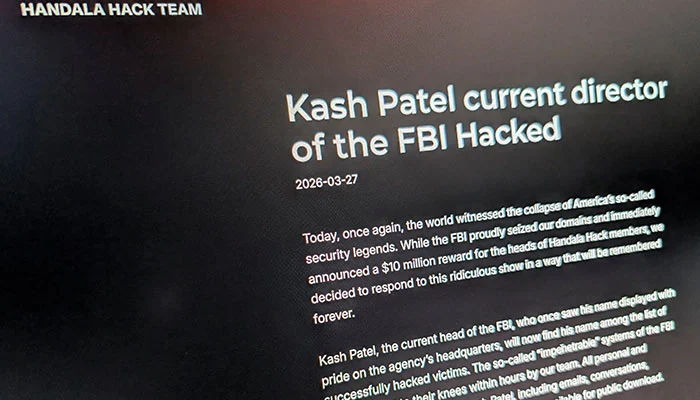
Iran-linked hackers have successfully infiltrated the personal email account of FBI Director Kash Patel, releasing numerous photographs and over 300 emails online, according to both the hackers and the FBI on Friday.
The hacking group, Handala Hack Team, which claims ties to Iranian cyber intelligence, posted on their website that Patel “will now find his name among the list of successfully hacked victims.” They shared personal photos of Patel engaging in activities such as smoking cigars, riding in a vintage convertible, and making faces while posing with a large bottle of rum.
The FBI has acknowledged that Patel’s emails were targeted. FBI spokesperson Ben Williamson stated, “We have taken all necessary measures to mitigate potential risks from this activity,” emphasizing that the compromised data was “historical in nature and does not involve any government information.”
Handala, which positions itself as a pro-Palestinian vigilante hacking group, is widely considered by Western analysts to be a persona used by Iranian government cyber units. The group recently claimed responsibility for a March 11 breach of Michigan-based medical equipment and services provider Stryker, asserting they erased a large cache of corporate data.
In addition to the photographs, the hackers released a sample of more than 300 emails, which appear to cover both personal and professional correspondence from 2010 to 2019. While Reuters could not independently authenticate the emails, the personal Gmail account linked to Handala matches previous leaks tied to Patel, according to dark web intelligence firm District 4 Labs. Google, which manages Gmail, has not yet responded to inquiries.
Iran-linked hackers have increasingly brazenly publicized their cyber activities as tensions escalate between the U.S. and Iran. Besides the Stryker breach, Handala claimed on Thursday to have leaked the personal data of numerous Lockheed Martin employees based in the Middle East. Lockheed Martin responded by stating it has policies to address cyber threats.
Cybersecurity experts suggest that these operations aim to destabilize and humiliate U.S. officials by exposing their vulnerabilities, a tactic Iran appears to be employing more openly as hostilities heighten. Such breaches of high-profile individuals’ personal emails are not unprecedented; past incidents include the hacking of Hillary Clinton’s campaign chairman John Podesta in 2016 and data leaks from then-CIA Director John Brennan’s AOL account in 2015.
An intelligence assessment reviewed by Reuters on March 2 indicates that Iran and proxy groups may respond to recent U.S. military actions against Iran with low-level cyberattacks targeting American networks, illustrating a pattern of increased cyber retaliation.
Harboring additional emails, Iran-linked hacking groups might have further damaging information in reserve. Last year, a group claiming to be “Robert” indicated intentions to release 100 gigabytes of data stolen from U.S. officials close to President Trump, including White House Chief of Staff Susie Wiles, though Reuters has been unable to verify this claim, and the group has been unresponsive in recent months.
 ChatGPT
 Perplexity
 Gemini AI
 Grok AI