Select Language:
A girls’ school in Iran’s Minab was struck on February 28, 2026, during the first day of the conflict. Prior to the attack, the school maintained an active online presence, including numerous photos of students engaged in various activities. Investigations, including those by Reuters, reveal that the school’s digital footprint was substantial, with images depicting girls dressed uniformly and playing, dating back to at least 2018 and archived in 2025.
The school’s online records also include a listing in a local business directory, with photos showing the alleyway marked explicitly as “Girls School.” Satellite imagery from recent months indicates the school was active in the community, with visible playground markings and structural details consistent with educational facilities.
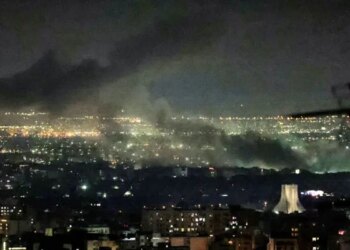
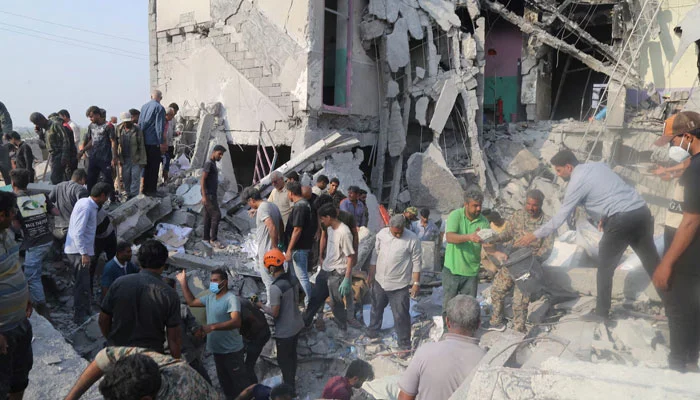
The school sat adjacent to a military installation, separated by a brightly painted wall. On February 28, the nearby structures, including at least one building in the Islamic Revolutionary Guard Corps (IRGC) complex, were hit during a barrage believed to include a U.S.-made Tomahawk cruise missile. Satellite data, photos, and videos confirm multiple explosions along a 325-meter stretch, with evidence of the destruction of the school and a nearby building that suffered a large hole on its roof.
Despite no official confirmation, U.S. President Donald Trump suggested Iran may possess Tomahawk missiles, though he provided no supporting evidence. The Pentagon stated that an investigation is ongoing but declined to comment on the specifics of the strike or the targeted location.
Two anonymous sources told Reuters that outdated targeting information might have contributed to the strike, a concern first reported by the New York Times. Defense analyst Mark Cancian of the Center for Strategic and International Studies indicated that the U.S. had long-term target lists for potential conflicts with Iran and emphasized the need for routine review of such targets.
The targeted buildings appear to have been specifically chosen, rather than part of a broader bombing campaign, with only six structures—including the school—being damaged within a five-kilometer radius between February 28 and March 2. Minab, located near the Strait of Hormuz and surrounded by farmland, hosts one of Iran’s largest IRGC missile bases, according to state media.
Post-attack satellite imagery highlighted significant upheaval, notably at the town cemetery, where fresh graves for victims were dug on March 2, arranged neatly in rows. The school was part of the Persian Gulf Martyrs’ Cultural Educational Institute, with its website displaying photos of students in the yard, corroborated by footage taken after the strike.
Further analysis shows the girls’ school and a similar boys’ school in Minab located in or near IRGC-controlled zones, as per archived website information. The girls’ school’s address is listed on Resalat Blvd, behind the Asef Brigade, a known missile unit under IRGC Navy command, with photos and Maps confirming the presence of the school on that site.
On the day of the strike, the U.S. Navy released images and videos of a Tomahawk missile launch from the USS Spruance, showing the missile in flight. Support for the missile type’s identity came from military experts who analyzed footage and debris, concluding it was likely a Tomahawk, though some suggested it could have been a glide bomb.
Satellite images from late 2015 confirm the school area was enclosed and functioning as an educational space since at least 2018, showing murals on the exterior walls. The Iranian media published photographs claiming the remnants of an American missile hit the school, with forensic expert Hany Farid confirming no signs of digital manipulation in the images.
Parts of the missile recovered from the scene match other Tomahawk segments shown by Yemen’s Houthi forces in 2025, reinforcing the assessment of the missile’s type. Notably, activity at the school persisted into December 2025, with imagery indicating gatherings in the yard.
 ChatGPT
 Perplexity
 Gemini AI
 Grok AI