Select Language:
WASHINGTON: The ongoing conflict with Iran is increasingly influencing the political landscape, threatening President Donald Trump’s legacy and elevating the stakes for two of his top advisors: Vice President JD Vance and Secretary of State Marco Rubio.
As discussions about ending the war unfold, these two potential successors to Trump find themselves at different ideological crossroads. Vance, who has expressed skepticism about prolonged military interventions, has taken a cautious stance, while Rubio aligns closely with Trump’s more aggressive approach, staunchly defending the administration’s recent policies.
Trump has indicated that both men have played roles in efforts to pressure Iran into dismantling its nuclear and missile programs and maintaining free flow of oil through the Strait of Hormuz. As the 2028 presidential election approaches and Trump’s term limits prevent him from running again, he’s privately querying allies and advisors about the succession, pondering between “JD or Marco,” according to sources familiar with his thinking.
The outcome of the ongoing military operation, now in its fifth week, could influence the 2028 prospects for these two figures. A quick resolution favoring the U.S. might boost Rubio, who also serves as Trump’s national security advisor and could be seen as a steady leader during a crisis. Conversely, a prolonged conflict might allow Vance to position himself as embodying Trump’s anti-war sentiments without openly breaking ranks.
Trump’s approval ratings have taken a hit in recent days, dropping to 36%, the lowest since his return to the White House, largely due to rising fuel prices and declining support for the Iran war, according to a recent Reuters/Ipsos poll.
Within Republican circles, many are watching to see which aide Trump seems to favor as the situation develops. Some perceive hints of Trump leaning toward Rubio, though they recognize he can change course swiftly.
“No one should read too much into body language; Trump’s signals are always fluid,” said a GOP source close to the White House. The administration has dismissed claims of favoritism, with spokesperson Steven Cheung emphasizing, “Media speculation about Vance or Rubio won’t distract us from fighting for the American people.”
Vance, a 41-year-old former Marine with Iraq experience, has long been skeptical of U.S. military interventions abroad. His comments on Iran have been measured; Trump noted their “philosophical differences” on the issue. Once a self-described “never-Trumper,” Vance authored a 2023 opinion piece in the Wall Street Journal advocating for avoiding wars during Trump’s first term from 2017 to 2021.
Despite some perceived differences, the White House plays down any rift. In fact, Vance recently expressed support for Trump’s handling of the conflict, aligning with the President’s stance that Iran shouldn’t develop nuclear weapons. It’s possible Vance could take a more active role in negotiations if key Trump advisers, such as Special Envoy Steve Witkoff and Jared Kushner, make significant headway.
A Vance spokesperson highlighted his pride in being part of a successful team under Trump’s leadership “making America safer and more prosperous.” An unnamed White House official noted that ideological differences are tolerated as long as loyalty remains intact, and Vance’s views help inform the President about voter sentiments.
Vance plans to wait until after the November midterms before considering a 2028 run, sources say. Rubio, 54, has publicly stated he won’t challenge Vance if he decides to run, and many believe Rubio would be content as Vance’s running mate if necessary.
Yet, any vulnerabilities perceived in Vance could encourage other GOP hopefuls. There’s talk that Trump might favor a ticket pairing Vance and Rubio, viewing such a duo as formidable. Still, Trump’s allies warn that the President likes to keep his options open and may not endorse anyone prematurely.
Polls indicate strong Republican support for Vance and Rubio, with 79% and 71% favorable ratings, respectively, compared to Trump’s 79%. Rubio, who once vied for the presidency in 2016 but clashed with Trump, has since mended his relationship and maintains both professional and personal ties with the current administration.
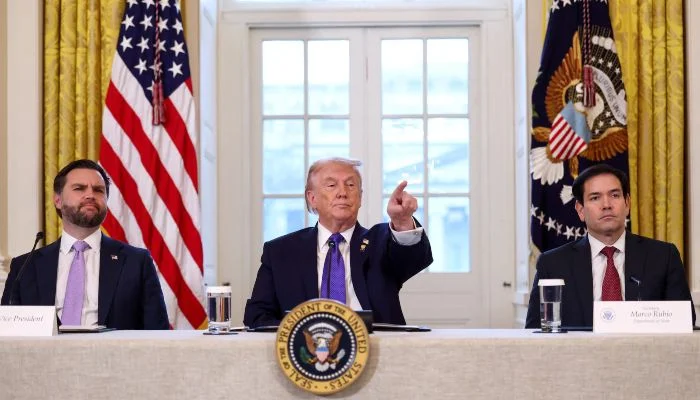
During a recent televised Cabinet meeting, Rubio vocally defended Trump’s aggressive stance on Iran, promising that the President will not leave threats in place. Vance, meanwhile, adopted a more cautious tone, emphasizing options for disarming Iran’s nuclear ambitions and offering supportive messages to U.S. military personnel.
Conservative leader Matt Schlapp emphasized that the political fallout of the Iran campaign will depend largely on its perceived success. If the conflict is resolved swiftly, approvingly, and results in achieving objectives, it could be politically advantageous. But if it drags on, Republicans may face mounting challenges in the public eye.
Overall, the situation continues to be a dynamic and closely watched aspect of GOP politics, with party members and observers carefully assessing how each leader’s stance and the conflict’s progression could shape the political future.
 ChatGPT
 Perplexity
 Gemini AI
 Grok AI