Select Language:
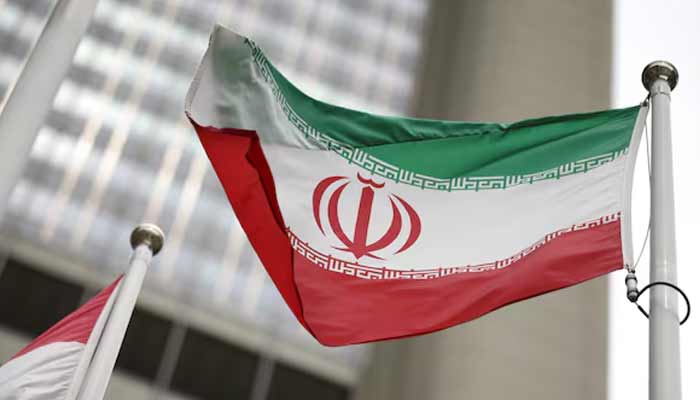
Iran announced on Saturday that it is no longer subject to restrictions on its nuclear program as the 10-year agreement with global powers concluded. Tehran reaffirmed its dedication to diplomacy. The 2015 nuclear deal—signed in Vienna by Iran, China, Britain, France, Germany, Russia, and the US—involved lifting international sanctions against Iran in exchange for limits on its nuclear activities.
However, the pact was already fractured after the U.S. unilaterally exited during President Donald Trump’s first term, leading Iran to relax some of its commitments. The reintroduction of UN sanctions last month, prompted by three European signatories, effectively nullified the agreement.
Iran’s foreign ministry stated that, from now on, “all provisions of the deal, including restrictions on Iran’s nuclear activities and related mechanisms, are considered terminated.” Despite this, Iran emphasized its “strong stance on diplomacy.” Western nations have long accused Iran of covertly pursuing nuclear weapons—a claim Iran has repeatedly denied, insisting its nuclear program is solely for civilian uses like energy production.
The agreement’s “termination date” was set for October 18, 2025, exactly ten years after the resolution 2231 of the UN Security Council ratified it. Under the deal, Iran’s uranium enrichment was capped at 3.67%, and the country’s nuclear activities were to be strictly monitored by the International Atomic Energy Agency (IAEA).
Since the U.S. withdrew in 2018 and reinstated sanctions, Iran has increased its nuclear activities. Data from the IAEA indicates that Iran is the only non-nuclear-weapon country enriching uranium up to 60%, close to the 90% level needed for weapons, and far above civilian enrichment needs.
In July, Iran suspended cooperation with the IAEA after conflicts with Israel, citing the agency’s failure to condemn strikes on Iranian nuclear sites by the U.S. and Israel. The conflict during a 12-day war disrupted ongoing nuclear negotiations between Tehran and Washington.
In late September, under the initiative of France, Britain, and Germany, the UN reimposed broad sanctions on Iran for the first time in a decade. Iranian Foreign Minister Abbas Araghchi noted in an official UN letter that the expiration of the 2015 deal makes previous sanctions “null and void.”
The UK, France, and Germany accuse Iran of not fully cooperating with the IAEA and want Iran to return to negotiations with the U.S. Tehran blames the European signatories for undermining efforts to revive the deal, citing actions that have “sabotaged” progress on resumed cooperation.
 ChatGPT
 Perplexity
 Gemini AI
 Grok AI