Select Language:
Iran has issued a NOTAM (Notice to Airmen) announcing live-fire military exercises in the skies near the Strait of Hormuz, just hours after U.S. military units arrived in the Middle East, signaling increased regional tensions. The alert specifies that Iranian forces will conduct live-fire drills from January 27 to January 29 within a five-nautical-mile radius around the strait. During this period, airspace from ground level up to 25,000 feet will be restricted and deemed hazardous.
The Strait of Hormuz, a critical global trade choke point, sees millions of barrels of oil pass through daily. Any disturbance there could impact worldwide energy markets and elevate geopolitical concerns. This NOTAM coincides with an expanded U.S. military presence in the region, including a multi-day readiness exercise led by U.S. Air Forces Central (AFCENT), aimed at showcasing rapid deployment and support capabilities.
U.S. officials have indicated that all options remain on the table regarding Iran, including potential military action, as Washington and Israel continue to counter Tehran’s influence. Iranian leaders have warned that any attack would trigger a swift and comprehensive response, escalating regional tensions.
The airspace restrictions will affect civilian and military flights during the exercises. Typically, NOTAMs are issued ahead of live-fire events to alert pilots and airlines of potential hazards and temporary closures.
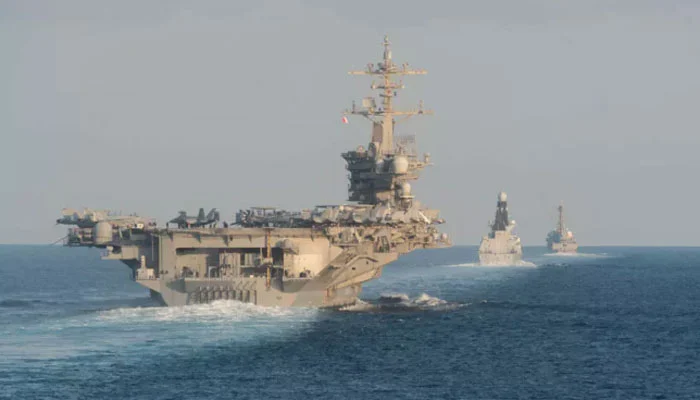
In regional developments, the USS Abraham Lincoln aircraft carrier, accompanied by several guided-missile destroyers, has entered Middle Eastern waters under U.S. Central Command. President Donald Trump stated that a U.S. naval “armada” is en route to Iran, expressing hope that military force would not be necessary. The deployment came after rising tensions following Iran’s crackdowns on protests. Trump has previously threatened intervention if Iran’s actions against protesters persist, although recent protests have diminished, and he reports that killings are reducing.
The U.S. has historically increased military presence in the Middle East during periods of tension, including a significant buildup before June’s strikes on Iran’s nuclear program. Along with ships, fighter jets and air-defense systems are being repositioned to the region.
Israeli Prime Minister Benjamin Netanyahu remarked that “Trump will decide what he decides, and Israel will decide what it does,” warning that any Iranian attack on Israel would be met with an unprecedented response.
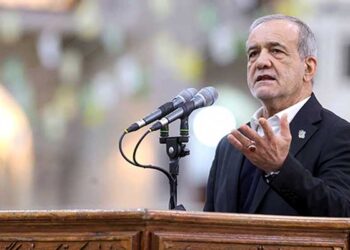
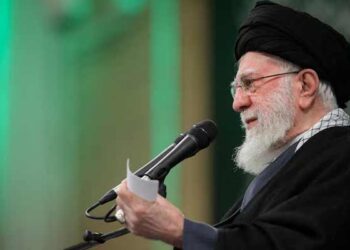
Iranian authorities have warned the U.S. against aggression, with President Masoud Pezeshkian condemning American threats as destabilizing regional security. Iran’s Revolutionary Guards have also issued warnings to neighboring countries, emphasizing that if Iran’s soil, sky, or waters are used against it, those states would be considered hostile. A senior Iranian official has stated that any attack would be viewed as full-scale war, and Iran’s military is prepared for the worst, ready to respond aggressively.
Saudi Arabia and the United Arab Emirates have assured Iran they will prevent their airspace, land, or waters from being used for hostile military activities against Iran. Meanwhile, U.S. military bases like Al Dhafra in the UAE continue to be pivotal in supporting operations against ISIS and regional reconnaissance efforts.
 ChatGPT
 Perplexity
 Gemini AI
 Grok AI