Select Language:
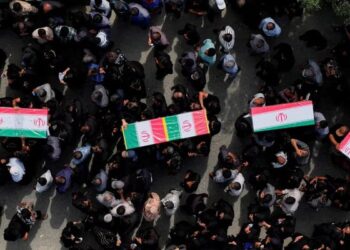
Iran reports a death toll of 3,117 during recent protests, labeling the unrest as “foreign-backed acts of terrorism,” with 2,427 individuals—comprising civilians and security personnel—being recognized as martyrs. The protests, initially driven by economic frustrations, transformed into a widespread movement against the current leadership that has held power since the 1979 revolution, with mass demonstrations erupting from January 8 for several consecutive days.
Despite the visible unrest, recent activities seem to have diminished, largely due to a stringent crackdown coupled with widespread internet blackouts, according to activists. The Iranian government has condemned the protests as violent riots incited by the U.S., describing them as acts of terrorism.
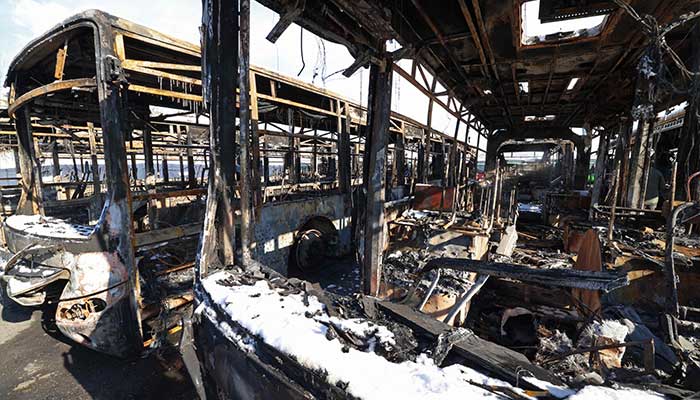
Images from an official tour in Tehran depict the aftermath of the protests, showing burned buses at a depot and damaged government buildings, including the Al-Aqsa Mosque. Authorities have emphasized that the high number of martyrs reflects the security forces’ restraint and patience during the unrest.
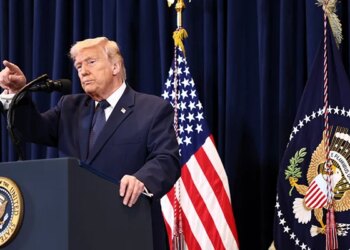
Reza Pahlavi, the son of the former shah who was ousted, emerged as a notable figure in the protests, calling for nightly demonstrations and expressing a willingness to return to Iran. His mother, Empress Farah Pahlavi, in a rare interview from Paris, stated there is “no turning back” after the protests. Meanwhile, former U.S. President Donald Trump hinted at the possibility of military intervention, though hopes for a swift American response have waned. Iranian General Abolfazl Shekarchi warned Trump that any attack on Iran’s Supreme Leader Ayatollah Khamenei would provoke retaliation. In response, Trump asserted that “anything happens, they will be wiped off the face of this earth.”
 ChatGPT
 Perplexity
 Gemini AI
 Grok AI