Select Language:
Iran’s top nuclear official has suggested that Tehran might agree to dilute its highly enriched uranium—enriched to 60%—if all economic sanctions are lifted. This statement marks a significant indication of Iran’s current stance during discussions with the United States. Last week, U.S. and Iranian representatives engaged in negotiations facilitated by Oman, aiming to re-establish diplomacy amid heightened regional tensions, including the deployment of a U.S. naval fleet in the area, which has raised concerns about potential military conflict.
Following recent protests—the largest in Iran since the 1979 Revolution—U.S. President Donald Trump supported Israeli airstrikes on Iranian nuclear facilities and had threatened military intervention during the unrest, though he ultimately refrained from taking such action. The U.S. has pushed Iran to surrender its uranium stockpile, which the United Nations’ nuclear watchdog estimated last year to be over 440 kilograms of uranium enriched up to 60%, nearing weapons-grade levels at 90%.
Iran’s Atomic Energy Organization chief, Mohammad Eslami, stated that diluting the 60% uranium would depend on the complete lifting of sanctions. He also clarified that the possibility of sending Iran’s highly enriched uranium abroad had not been part of the current negotiations.
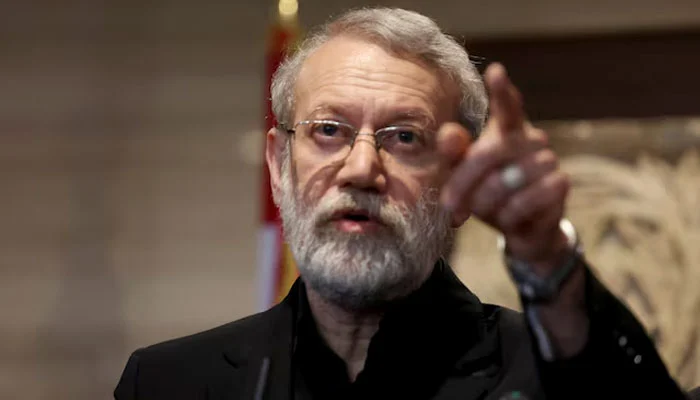
Meanwhile, Ali Larijani, an influential adviser to Iran’s Supreme Leader Ayatollah Ali Khamenei and Secretary of the National Security Council, is scheduled to visit Oman following the talks. During this trip, Larijani will meet with Omani officials to discuss regional and international developments, along with bilateral cooperation.
The timing and location of the next round of negotiations remain undisclosed. Iran’s President Masoud Pezeshkian expressed optimism about a forthcoming dialogue, emphasizing that a fair solution relies on the U.S. moving away from maximalist demands and honoring its commitments. Pezeshkian reaffirmed Iran’s stance on maintaining its nuclear rights, including uranium enrichment rights, and resolving sanctions issues.
Last year, five rounds of talks took place between Iran and the U.S., mainly faltering over disagreements about uranium enrichment. Since then, Iran claimed to have halted enrichment activities, asserting that its nuclear program is solely peaceful. While the U.S. has sought to include Iran’s missile program in negotiations, Iran has rejected this.
In a televised message, Khamenei urged Iranians to participate actively in the anniversary celebrations of the 1979 Revolution. He emphasized that widespread public participation would demonstrate loyalty to the Islamic Republic and deter foreign adversaries from coveting Iran’s sovereignty.
 ChatGPT
 Perplexity
 Gemini AI
 Grok AI