Select Language:
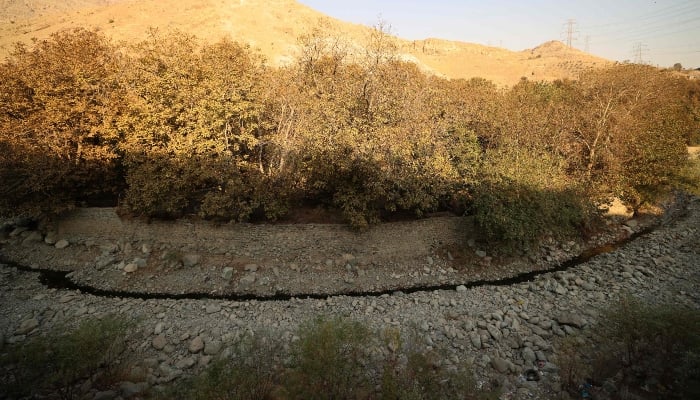
Iran is experiencing its most severe drought in decades, prompting authorities to begin cloud seeding operations aimed at increasing rainfall. According to state media, the first cloud seeding flight of the current water year—started in September—took place over the Urmia Lake basin on Saturday. Urmia, the largest lake in Iran located in the northwest, has dried up significantly, transforming into a vast salt flat due to prolonged drought conditions.
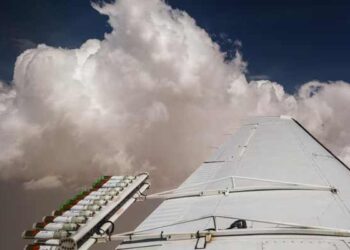
Officials indicated plans to expand cloud seeding efforts to other regions, including East and West Azerbaijan provinces. Cloud seeding involves dispersing substances like silver iodide or salt into clouds from aircraft to facilitate rain formation. Iran claimed to have developed its own technology for this process last year.
Rainfall was reported in several western provinces, including Ilam, Kermanshah, Kurdistan, and Lorestan, as well as in northwestern West Azerbaijan. The country’s meteorological agency reported an overall decrease in rainfall of approximately 89% compared to historical averages this year, describing this autumn as the driest experienced in the past 50 years.
Footage also displayed snow falling on Tochal Mountain and nearby ski resorts in Tehran for the first time this year. Iran, predominantly arid and susceptible to chronic droughts and heat waves, expects these conditions to intensify due to climate change. The capital city has seen its lowest rainfall in a century, and nearly half of the country’s provinces haven’t received rain for several months. Reservoir water levels serving multiple provinces have dropped to record lows. Earlier in the month, President Masoud Pezeshkian warned that Tehran could face evacuation if winter arrives without sufficient rainfall, though he did not provide specifics.
Regional countries like the United Arab Emirates have also employed cloud seeding to artificially induce rain, highlighting its use as a strategy against persistent droughts.
 ChatGPT
 Perplexity
 Gemini AI
 Grok AI