Select Language:
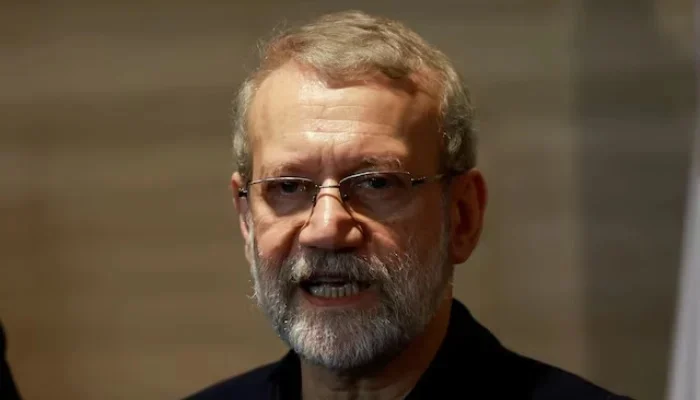
Ali Larijani, a former head of the Iranian Parliament, attended a news conference following a meeting with Lebanese Parliament Speaker Nabih Berri in Beirut on November 15, 2024, according to Reuters.
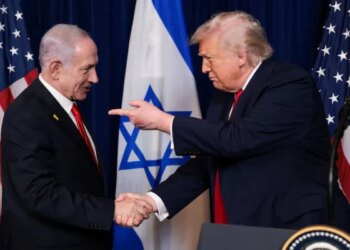
– President Trump confirms that the United States is in talks with Iran but issues a warning about potential military action.
– The U.S. has positioned warships, including the USS Abraham Lincoln aircraft carrier, near Iran.
– Qatar’s Prime Minister is engaged in discussions in Tehran aimed at reducing regional tensions.
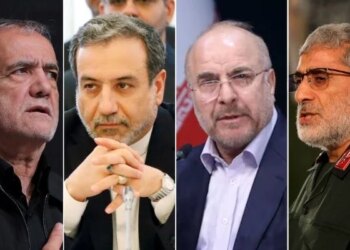
Iran’s top security official announced Saturday that progress has been made in negotiations with the U.S., although the Iranian military chief warned Washington against launching military strikes. Trump acknowledged that negotiations are ongoing but emphasized the threat of military intervention remains.
Washington’s military presence has increased with the deployment of warships off Iran’s coast, following Trump’s threats after Tehran’s crackdown on protests. Ali Larijani stated that, despite media hype, structural negotiations are advancing, and he had met with Russian President Vladimir Putin in Moscow a day earlier.
Iranian President Masoud Pezeshkian expressed concern that a broader conflict would harm both Iran and the U.S., highlighting Iran’s stance against seeking war. He reiterated Iran’s position that it does not desire conflict and believes war is not in the best interest of the region.
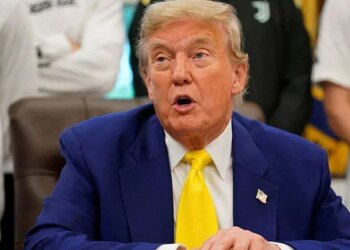
Later on Saturday, Trump confirmed ongoing dialogue between Washington and Tehran, stating, “Iran is talking to us, and we’ll see if we can reach an agreement. Otherwise, we’ll see what happens… we have a large fleet out there.” He added, “They are negotiating.”
Qatar’s foreign minister, Sheikh Mohammed bin Abdulrahman Al Thani, also serves as Qatar’s Prime Minister and held talks with Larijani in Tehran to try to de-escalate regional tensions.
Fears of conflict have grown with the deployment of U.S. naval forces, as Iran has warned it would respond with missile strikes on U.S. bases, ships, and allies, including Israel, if attacked. Trump believes Iran prefers to negotiate over its nuclear and missile programs rather than face military action. Iran has expressed willingness to discuss nuclear issues if its missile and military capabilities are not on the table.
Iran’s military commander Amir Hatami warned the U.S. and Israel against any attack, stating his forces are fully prepared for defense. He warned that any mistake by the enemy would threaten regional and Israeli security and asserted that Iran’s nuclear technology and expertise are irreplaceable.
Amid escalating tensions, Iranian authorities quickly denied that recent incidents, including an explosion in Bandar Abbas caused by a gas leak, were related to any attack or sabotage.
On Friday, U.S. Central Command announced that Iran’s Revolutionary Guard Corps would conduct a two-day live-fire naval drill in the Strait of Hormuz, a vital route for global energy supplies. CENTCOM warned Iran to avoid unsafe or unprofessional actions near U.S. forces, prompting a sharp protest from Iran’s foreign minister, Abbas Araghchi.
The designation of Iran’s IRGC as a terrorist organization by the U.S. in 2019, followed by the European Union’s similar move, has further strained relations. In June, the U.S. carried out strikes against Iran’s nuclear sites amid fighting between Israel and regional adversaries.
Mass protests against economic hardship erupted in late December and expanded into larger anti-government demonstrations in early January, which the Iranian government blamed on the U.S. and Israel. Official death tolls remain at 3,117, though reports from human rights groups suggest the actual number may be over twice that.
Iranian President Pezeshkian called on his government to listen to the public’s grievances and prioritize serving the people. Some Iranians near the Iran-Turkey border expressed frustration with the current leadership, with one individual, Shabnan, describing their experiences of being targeted by gunfire and losing loved ones, emphasizing a desire to be free from Tehran’s clerical rulers.
 ChatGPT
 Perplexity
 Gemini AI
 Grok AI