Select Language:
Authorities point fingers at “rioters” for the unrest, while opposition groups demand a nationwide strike. At least 27 protesters have lost their lives amidst ongoing demonstrations.
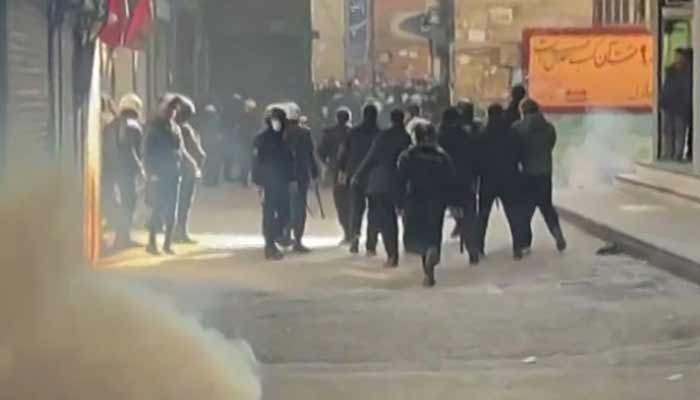
Security personnel employed tear gas and live ammunition to break up crowds, according to human rights organizations. The protests, fueled by economic hardship, persist in Iran, challenging Ayatollah Ali Khamenei’s clerical regime, which is already under pressure from years of sanctions and recent conflicts with Israel.
The upheaval began with a protest at the Tehran bazaar on December 28, following the rial’s collapse to historic lows. Since then, the movement has expanded across the country, with larger protests reported. Authorities have branded the protests as the work of “rioters” and have vowed strict punishment, with the judiciary chief promising no mercy.
On Wednesday, a police officer was fatally stabbed in western Tehran during efforts to control the unrest, according to state news agency Fars. Reza Pahlavi, the son of the former shah ousted in 1979 and a prominent exile opposition leader, described the turnout of recent protests as unprecedented. He called for new demonstrations on Thursday evening and suggested the regime is deeply alarmed, reportedly attempting to shut down internet access once again.
Kurdish opposition factions based in Iraq, including the outlawed Komala party, have called for a general strike in western Iran’s Kurdish regions, which have seen intense protest activity.
Protesters in Kuhchenar, in Fars province, proudly tore down a statue of Qassem Soleimani, the former Revolutionary Guards commander killed in a U.S. drone strike in 2020, who is celebrated as a national hero by Iran. Outside Iran, Persian-language TV channels showed images of a Soleimani statue set ablaze in Kashan. The authenticity of these images couldn’t be immediately confirmed.
According to HRANA, Iran’s human rights news agency, protests have erupted in 348 locations across all 31 provinces within the past 11 days. Footage shows crowds gathering late at night in Karaj, setting fires in the streets, and security forces targeting protesters with tear gas in Tonekabon. Reports from Abadan depict security firing on demonstrators.
The Iran Human Rights organization based in Norway reported that security forces fired on protesters, used tear gas, and violently assaulted civilians in Kerman, a key southeastern city. The Hengaw Human Rights group, focusing on Kurdish and other minority populations, noted widespread strikes in about 30 towns and cities, with images showing shuttered shops in Ilam, Kermanshah, and Lorestan.
Demonstrations are scaling up, with hundreds marching through Bojnord in northeastern Iran, chanting slogans against the ruling leaders, including “this is the final battle, Pahlavi will return” and “Seyyed Ali will be toppled,” referring to Khamenei.
Since Tuesday, death tolls confirmed by IHR have risen to at least 27, including five minors under 18, with fears of further casualties as protests continue. These are the largest in Iran in three years, following a major wave in 2022-2023 sparked by the death of Mahsa Amini, who died in custody after being detained for allegedly violating strict dress codes.
Rights groups have also accused authorities of extrajudicial tactics, such as raiding hospitals to detain wounded protesters.
Amnesty International condemned the excessive use of force, stating, “More than 10 days of protests have been met with unlawful force,” adding that security forces have injured and killed both protesters and bystanders.
 ChatGPT
 Perplexity
 Gemini AI
 Grok AI