Select Language:
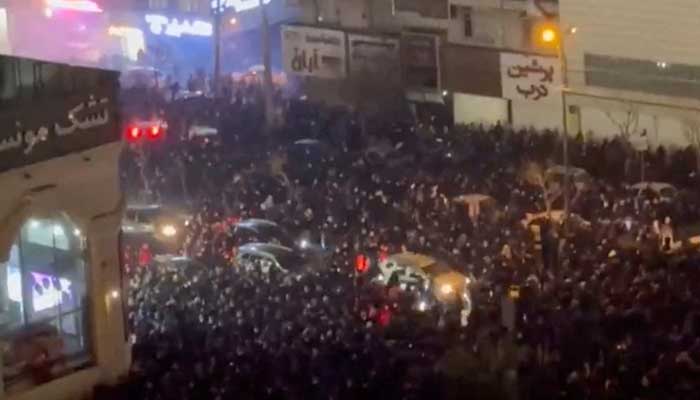
Demonstrating ongoing unrest, crowds have gathered in the streets of Tehran amidst anti-government protests, as captured from a social media video released on January 8, 2026. — Reuters
A rights organization estimates that over 500 people have lost their lives during the two-week period of unrest. Meanwhile, internet access remains severed across Iran, restricting the flow of information. The Iranian government has summoned the UK ambassador to the foreign ministry, protesting comments made by Britain’s foreign minister, and protesting a demonstrator’s act of removing and replacing the Iranian flag at the London Embassy with a pre-1979 revolution banner.
On Sunday, the government announced three days of national mourning for “martyrs,” including security personnel killed during the protests. State TV described these protests as part of a broader “resistance battle” against the United States and Israel, using terminology favored by Iran’s clerical leadership, with the latter referred to as the “Zionist regime,” which Iran does not officially recognize.
President Masoud Pezeshkian called for nationwide rallies on Monday to denounce the violence, which government officials blame on “urban terrorists.” The protests, initially fueled by economic grievances like rising living costs, have transformed into a broader challenge to Iran’s theocratic regime that has been in place since 1979. These demonstrations are among the most significant since the 2022 unrest, presenting a direct challenge to Supreme Leader Ayatollah Khamenei, who is 86.
Despite a shutdown of internet services for over 72 hours, activism persists, though monitor Netblocks warns that the actual death toll could be significantly higher due to limited information flow. According to HRANA, a US-based rights group, at least 490 protesters and 48 security personnel have been confirmed dead, with over 10,600 arrests made.
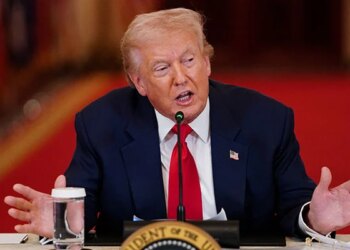
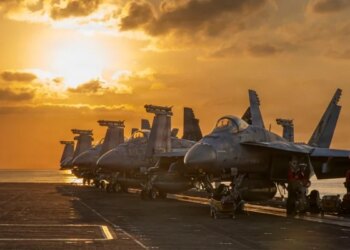
In the United States, President Trump plans to meet with senior advisors on Tuesday to discuss potential actions regarding Iran. Options reportedly include military strikes, cyber operations, expanded sanctions, or covert support to opposition groups. Iranian officials have warned Washington against miscalculations, with Parliament Speaker Mohammad Baqer Qalibaf asserting that any attack would target Israeli and US military targets.
Iran’s unrest occurs amidst heightened US global posturing, including the ousting of Venezuela’s Nicolás Maduro and discussions of acquiring Greenland through purchase or force. President Pezeshkian accused the US and Israel of orchestrating destabilization efforts, claiming that enemies have infiltrated Iran with terrorists responsible for violent acts like torching mosques and attacking infrastructure.
In response to recent events, Iran summoned the British ambassador over supposed interventionist comments and an incident involving the removal and replacement of the Iranian flag at the London Embassy. Iran’s state broadcaster has shown footage of funerals for security personnel killed during the protests, with reports indicating the burial of 30 security officers in Isfahan and six others in Kermanshah, all reportedly slain by “rioters.”
 ChatGPT
 Perplexity
 Gemini AI
 Grok AI