Select Language:
- Trump explores multiple options, including military action against Iran.
- Iran warns it will target U.S. military and shipping assets if attacked.
- Trump plans to meet with top advisors Tuesday to review Iran strategies.
The Iranian Foreign Minister Abbas Araqchi stated Monday that the situation in Iran is “completely under control” after recent protests and related violence, according to an English translation of his remarks.
“We are prepared for war but also open to dialogue,” Araqchi told foreign ambassadors in Tehran on Monday, through an English interpreter.
He further suggested that President Trump’s threats of military intervention, warning of possible escalation if protests turn deadly, have prompted “terrorist” groups to attack protesters and security forces in an effort to provoke foreign involvement.
This statement follows Trump’s comments about contemplating military action against Iran amidst widespread anti-government protests across the country.
During a brief exchange on Air Force One, Trump indicated that Iran’s actions appeared to be crossing his “red line” regarding deadly protesters.
“They’re starting to do that, it seems,” Trump told reporters. “We’re taking it very seriously. The military is reviewing options, and a decision will be made soon.”
The President also noted that Iran’s leadership has reached out seeking negotiations after his threats, saying, “The Iranian leaders contacted us yesterday. We’re setting up a meeting… They want to talk.”
However, he added, “We might have to act before that meeting occurs.”
Meanwhile, China expressed hope Monday that Iran’s government and people can navigate current challenges and maintain stability, referencing the violent protests in the oil-rich nation.
A Chinese foreign ministry spokesperson emphasized that China opposes the use of force or threats of force in international affairs, responding to Trump’s military threat.
“We have always opposed interference in the internal affairs of other countries and advocate for the full protection of sovereignty and security under international law,” said spokesperson Mao Ning during a regular briefing.
Top-level US discussions on Iran
President Trump is scheduled to meet with senior advisors on Tuesday to assess options regarding Iran, according to a U.S. official cited by Reuters on Sunday.
The Wall Street Journal reported that these options could include military strikes, cyber operations, increased sanctions, or support for anti-government groups online.
Earlier, Iranian Parliament Speaker Mohammad Baqer Qalibaf warned Washington against what he called a “miscalculation.”
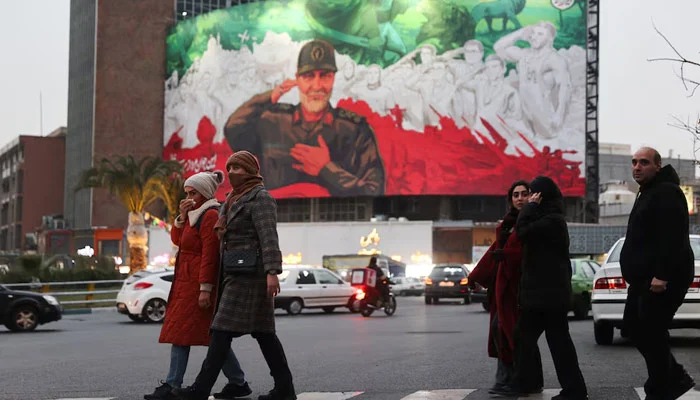
Qalibaf, a former commander of Iran’s Revolutionary Guards, warned, “In the event of an attack on Iran, our legitimate targets will include Israel, as well as U.S. military bases and ships.”
Iran’s call for unity and resistance
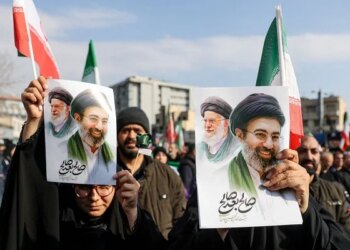
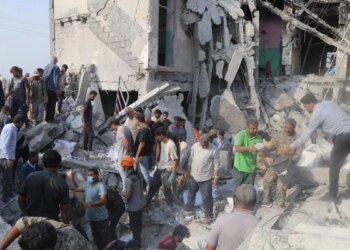
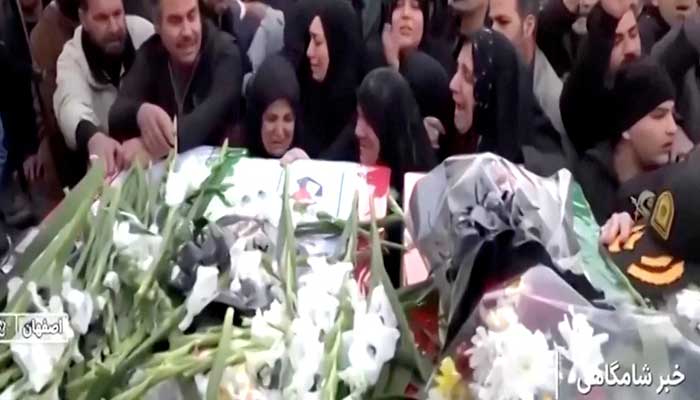
The Iranian government announced three days of national mourning for those killed, including security personnel, during two weeks of protests, according to state television.
The government described its efforts as part of a “national resistance” against America and the Zionist regime, a term Iran uses for Israel, which it does not recognize diplomatically.
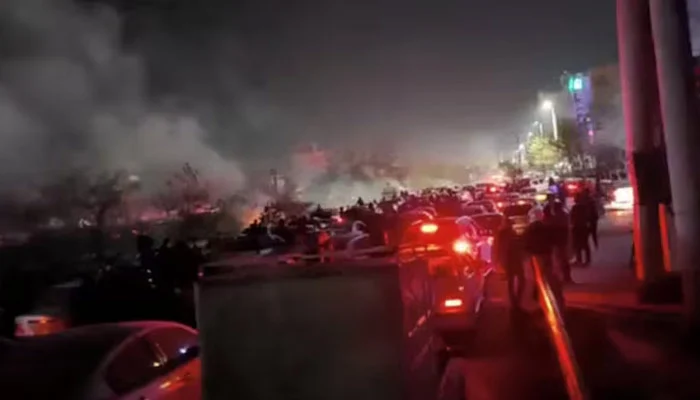
President Masoud Pezeshkian urged citizens to participate in a “national resistance march” on Monday, with nationwide rallies to condemn recent violence. The government attributes the unrest to “urban terrorist criminals.”
Despite a blackout of internet services lasting over three days, protests have continued to grow, with activists warning that suppressed information likely means the real number of casualties is much higher, according to monitoring group Netblocks.
As of Sunday, rights organizations report that over 500 people have been killed during these protests. HRANA, a US-based rights group, verified the deaths of 490 protesters and 48 security personnel, with more than 10,600 arrests in the past two weeks.
 ChatGPT
 Perplexity
 Gemini AI
 Grok AI