Select Language:
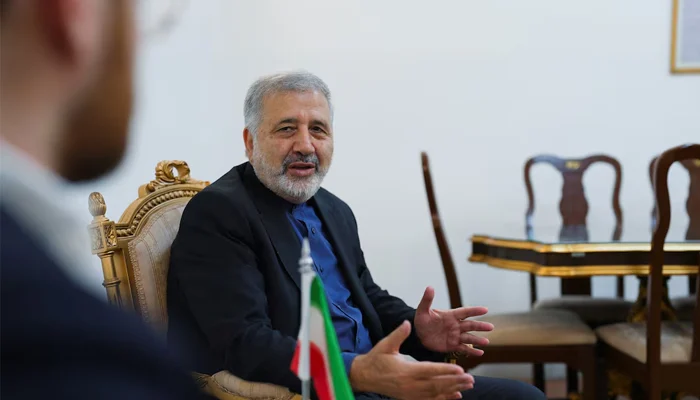
Iran has announced that its relationship with Gulf nations will need a “serious review” due to the ongoing US-Israeli conflict, emphasizing the importance of minimizing external influences to foster regional prosperity. Tehran’s ambassador to Saudi Arabia, Alireza Enayati, conveyed that despite concerns about potential damage to diplomatic ties, Iranians and Gulf neighbors are interconnected and must reassess their partnerships.
He pointed out that regional issues over the past fifty years have resulted from exclusionary policies and excessive dependence on outside powers. Enayati called for stronger cooperation among the Gulf Cooperation Council member states, along with Iraq and Iran.
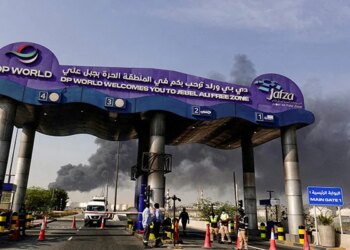
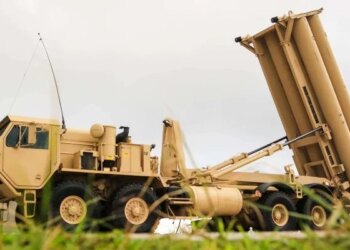
Since the conflict began on February 28, the Gulf Arab states have endured over 2,000 missile and drone strikes. Targets have included U.S. diplomatic missions, military installations, and critical oil infrastructure, ports, airports, and hotels. The United Arab Emirates, which normalized relations with Israel in 2020, has suffered the most, but all Gulf countries have been affected and uniformly condemn Iran.
Behind closed doors, analysts suggest there is mounting frustration with the United States, which has long been the security guarantor for the region, for involving Gulf nations in a conflict they did not support but are paying dearly for.
Attacks have primarily targeted Saudi Arabia’s eastern oil-rich region, as well as the Prince Sultan Airbase near Riyadh and the Diplomatic Quarter on the city’s western side, according to Saudi authorities. Saudi Arabia and Iran renewed full diplomatic ties in 2023 after years of hostility.
Enayati denied Iran’s involvement in attacks on Saudi oil facilities, including the Ras Tanura refinery and attempted drone strikes near the UAE border on the Shaybah oil field. He stated, “Iran is not responsible for these attacks. If we had carried them out, we would have claimed responsibility.” He refused to name those responsible.
Saudi defense officials have not officially blamed Iran for specific incidents. Enayati emphasized that Iran’s targets are primarily U.S. and Israeli interests and claimed that Iran maintains ongoing communication with Saudi officials, including cooperation on religious pilgrimages and medical aid. Discussions are also reportedly ongoing regarding Saudi Arabia’s public assurance that its territory will not be used to attack Iran.
He reiterated that the war is an imposed conflict on the region and stressed the need for the US and Israel to cease their attacks. He called on regional countries to stay out of the conflict and urged international guarantees to prevent further escalation. Only by doing so, he said, can the region focus on building prosperity.
 ChatGPT
 Perplexity
 Gemini AI
 Grok AI