Select Language:
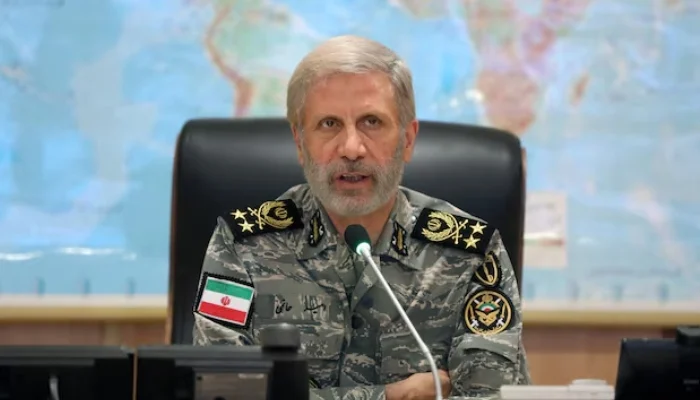
Iran’s military leader Amir Hatami issued a warning to the United States and Israel on Saturday, asserting that any attack would jeopardize regional stability and Israel’s security. Following the U.S. military’s significant deployment of forces to the Gulf, including the aircraft carrier USS Abraham Lincoln, Hatami confirmed that Iran’s forces are on full defensive readiness. He stressed that Iran’s nuclear capabilities are indestructible, despite remarks from former President Trump suggesting Tehran might seek a deal to avoid U.S. strikes.
“If the enemy makes a mistake, it will definitely threaten its own security, as well as the security of the region and Israel,” Hatami said, according to IRNA. The situation has stirred fears of a direct confrontation, with Iran warning it would retaliate with missile strikes on U.S. bases, vessels, and regional allies in case of aggression.
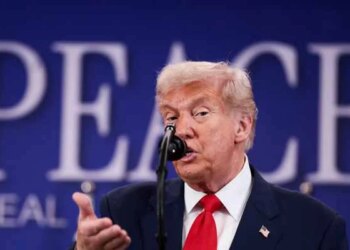
Recently, Trump expressed hope that Iran would pursue negotiations over its nuclear and missile programs rather than face military action. Tehran’s Foreign Minister Abbas Araghchi indicated that Iran is prepared for nuclear talks but remains firm that its missile and defense systems are non-negotiable.
In June, the U.S. launched strikes targeting Iran’s key nuclear sites amid regional tensions. Israel also carried out attacks across Iran, killing high-ranking officers and nuclear scientists. Hatami emphasized that Iran’s nuclear technology is an enduring asset that cannot be eradicated, even if Iranian scientists and citizens are martyred.
The U.S. Central Command (Centcom) announced that Iran’s Islamic Revolutionary Guard Corps (IRGC) would conduct a two-day naval exercise in the Strait of Hormuz, a crucial hub for global energy shipments. Centcom warned the IRGC to avoid unsafe or unprofessional behavior near U.S. forces. The IRGC was designated a terrorist organization by the U.S. in 2019, a status followed by the European Union this past Thursday, prompting Iran to promise reciprocal measures.
Regarding protests that erupted over rising living costs in Iran starting December 28, authorities claim the demonstrations initially were peaceful but evolved into “riots” involving violence and destruction, blaming the U.S. and Israel for instigating unrest as part of a “terrorist operation.” The government reports a death toll of 3,117, though protests have since cooled.
Iranian President Masoud Pezeshkian urged the government to respond justly and work with the populace. He emphasized that fairness and adherence to rights are essential for stability, asserting that a just government can withstand external and internal pressures.
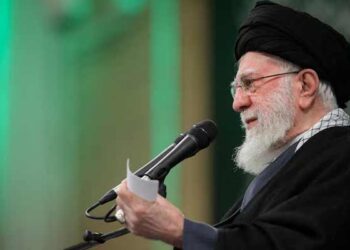
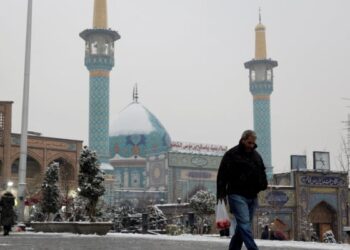
Meanwhile, Iran’s Supreme Leader Ayatollah Khamenei visited the shrine of Ruhollah Khomeini in southern Tehran, commemorating the 47th anniversary of the 1979 Revolution. He shared prayers during the celebration, reinforcing his support for the revolutionary ideals.
 ChatGPT
 Perplexity
 Gemini AI
 Grok AI