Select Language:
The iPhone 17 has just been released, and once again, it offers only subtle updates that mainly incorporate features from last year’s Pro models.
The starting price for the base model with 256GB of storage has been set at $799 — a significant upgrade, as the standard storage capacity has now doubled. Pre-orders begin on Friday, September 12, with the device hitting stores a week later, on September 19.
The design, display, camera system, chipset, and charging are the primary focus of changes. While none of these updates are groundbreaking individually, collectively they make for a notable redesign.
### Revamped Design and Display
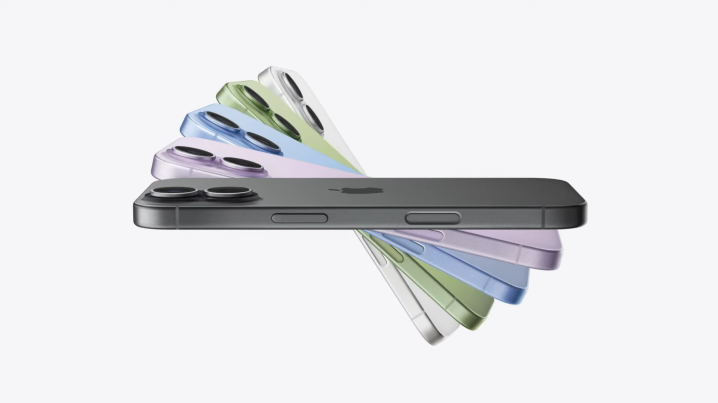
Apple refers to the new look as Magichromatic, introducing fresh color options such as Lavender (a soft purple), Mist Blue (a light blue), Sage (a muted green), along with classic white and black. One of the most attractive features is the new Ceramic Shield 2 glass on the front, making the device more durable than previous models. However, it’s worth noting that the iPhone 17 Pro and iPhone Air still feature this sturdy glass on both the front and back for added protection.
The display size has grown to 6.3 inches, boasting a brightness of up to 3,000 nits—50% brighter than the iPhone 16. This improvement makes a visible difference, especially when outdoors. Additionally, the screen benefits from ProMotion technology, which now refreshes at 120Hz, providing a smoother and more responsive experience.
### Enhanced Performance
Under the hood, the iPhone 17 houses Apple’s new A19 chip—though diving into the internals might void your warranty, so best to leave that to professionals. Apple claims this processor is designed to extend battery life throughout the day. Both this and the previous generation feature a 6-core CPU, with the new chip promising better power efficiency and performance so users can expect longer usage between charges.
### Better Battery Life
Battery performance has historically been a strong point for iPhones, and the iPhone 17 continues this trend. It is projected to offer about 30% more playback time compared to the iPhone 16, though real-world results will vary since it doesn’t incorporate Apple’s new C1 modem, which could further enhance efficiency. Overall, it seems to perform on par with rivals like Samsung’s Galaxy S25.
### Camera Upgrades
The camera array has seen some notable updates. The main sensor uses Apple’s new Dual Fusion technology, resembling last year’s model in focal length, aperture, and zoom range. The ultra-wide lens has been upgraded to 48MP, offering higher resolution and improved macro capabilities for detailed close-ups. Default high-res images are now 24MP, and to accommodate the larger file sizes, you might need to lower photo quality when storage is tight.
The front camera measures 18MP and includes a new square sensor that leverages Apple Intelligence to automatically determine if portraits or landscapes are best, adjusting accordingly without needing to rotate the device. The selfie camera also features “Center Stage,” ensuring you remain in frame during video calls, even if you move around.
### Additional Features and Specs
– Storage begins at 256GB, with upgraded options available up to 512GB priced at $999.
– Connectivity has been improved with the inclusion of Wi-Fi 7, enhancing streaming speeds on compatible routers—particularly beneficial for gigabit internet connections.
– In the U.S., the device relies solely on eSIM technology, supporting up to eight eSIMs, with no physical SIM slot.
– The USB-C port now uses the USB 2 standard, offering data transfer speeds up to 480Mbps, which remains consistent with last year’s model.
Overall, while the iPhone 17’s updates might seem incremental, they collectively deliver a more durable, brighter, and faster device — continuing Apple’s tradition of refining its flagship line with careful enhancements.
 ChatGPT
 Perplexity
 Gemini AI
 Grok AI