Select Language:
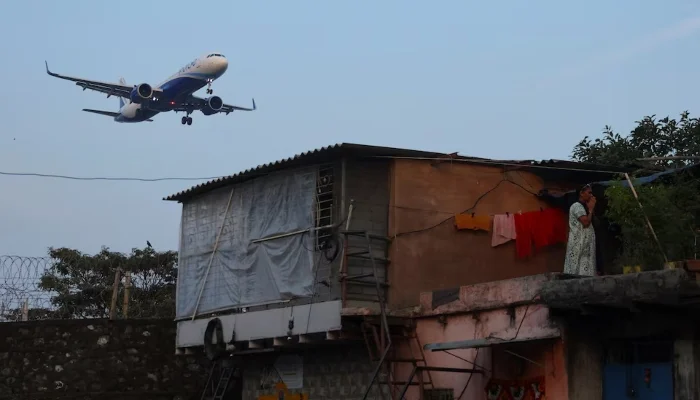
A series of flight cancellations by India’s largest airline, IndiGo, has triggered chaos over the past week, stranding tens of thousands of travelers and exposing vulnerabilities in the country’s aviation sector—dominated by a near-duopoly. For years, IndiGo, holding approximately 65% of the domestic market, helped many Indians fulfill their aspirations of flying, a goal President Narendra Modi has championed, once stating that even those “in slippers” should have the chance to fly. Known for its promise of affordable fares and punctual service, IndiGo became emblematic of India’s booming aviation industry.
However, recent events have shattered that image. The airline canceled a minimum of 2,000 flights last week, citing a pilot shortage caused by poor planning regarding new regulations that restrict pilot working hours. This led to disrupted vacation plans, canceled weddings, and images flooding social media of luggage piled up at airports—scenes unlike anything seen before in India’s aviation history.
The crisis hits at a sensitive time for India’s aviation sector. Competition remains fierce, with Air India, which commands about 27% of the market, having been state-owned until 2022. That airline has long struggled with an aging fleet and subpar service, and has come under increased scrutiny following a tragic crash in June that resulted in 260 fatalities.
While IndiGo expects to restore normal operations soon, authorities and industry observers are raising concerns. The dependence on a single dominant carrier raises questions about systemic risks and whether a collapse of IndiGo or Air India could cause widespread disruption. The government responded quickly by relaxing rules around pilot fatigue management to alleviate the cancellations. IndiGo issued public apologies but has not yet disclosed the financial impacts of the turmoil.
“IndiGo’s growth has reached a point where operational setbacks pose systemic risks,” said Harsh Vardhan, chairman of Starair Consulting. “If either IndiGo or Air India encounter serious trouble, chaos could ensue in Indian aviation—there’s a need to cut jet fuel taxes and foster more competition.”
India’s aviation market isn’t a pure duopoly—other nations like Australia and Canada have similar arrangements, and even China features three state-owned airlines alongside private operators. Still, with IndiGo and Air India controlling about 92% of the market—including Air India Express—the landscape resembles a duopoly, creating pronounced vulnerabilities. On many routes connecting smaller towns, IndiGo enjoys a monopoly status.
Expert G.R. Gopinath, founder of the defunct low-cost airline Air Deccan, emphasized that sustainable growth isn’t possible with duopolies or monopolies in any sector. Despite government efforts to expand airports and streamline operations, several airlines such as Kingfisher, Jet Airways, and Go First have gone bankrupt due to high taxes, intense competition, and supply chain challenges.
IndiGo did not respond to requests for comment. Nonetheless, it stated on Sunday that it plans to operate over 1,650 flights and is confident that stability will return by Wednesday.
India’s push to develop its aviation industry is central to Prime Minister Modi’s broader ambitions. Data from the International Air Transport Association shows that in 2024, about 174 million passengers traveled across or within India—an increase of 10% from the previous year. Founded in 2006 by Rakesh Gangwal and Rahul Bhatia, IndiGo has grown swiftly, now operating more than 400 Airbus A320 aircraft and serving nearly 380,000 passengers daily through over 2,000 flights. Current CEO Pieter Elbers, formerly of KLM Royal Dutch Airlines, leads the airline.
An industry insider describes this period as possibly the lowest in IndiGo’s history, with disruptions damaging its reputation—once built on punctuality, with an on-time rate of 91.4% in July, now plummeting to just under 4%. The fallout resembles Southwest Airlines’ significant holiday season disruption in 2022, which led to nearly 17,000 canceled flights and cost the U.S. carrier over $400 million. IndiGo faces both immediate financial impacts, such as customer refunds already reaching $68 million, and long-term damage to its brand image.
 ChatGPT
 Perplexity
 Gemini AI
 Grok AI