Select Language:
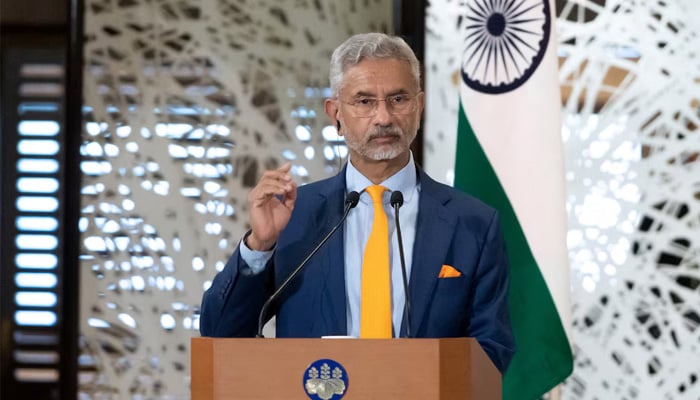
India’s External Affairs Minister Subrahmanyam Jaishankar spoke at a press conference at Iikura Guest House in Tokyo on July 29, 2024. — Reuters
– Jaishankar defends India’s continued trade in Russian oil, countering US claims of profiteering.
– Tensions escalate as Trump threatens to impose higher tariffs on Indian imports.
– The minister emphasizes India’s focus on maintaining strategic autonomy.
Karachi: India’s External Affairs Minister, Subrahmanyam Jaishankar, criticized U.S. President Donald Trump’s unconventional diplomatic style, calling it a departure from traditional international practice. He also reiterated that Washington’s assertion of mediating the recent India-Pakistan clash is unfounded.
Speaking to the press in New Delhi, Jaishankar noted that no U.S. president before Trump had engaged in diplomacy so publicly, highlighting how Trump’s approach diverges sharply from conventional, behind-the-scenes foreign policy tactics.
These comments come amid looming deadlines for Trump’s proposed tariffs on Indian products, which could increase duties by up to 50%, along with additional penalties related to India’s ongoing imports of Russian oil.
Regarding trade, Jaishankar stated that protecting Indian farmers and small producers remains a top priority. He asserted, “When it comes to trade, the interests of farmers, our strategic independence, and our stance against mediation are non-negotiable. If anyone disagrees, they should tell the Indian people that they’re willing to compromise on farmers’ interests or our strategic independence.”
He dismissed US accusations that India is profiteering by refining and re-exporting Russian oil, mocking those working in a pro-business American administration for leveling such claims. “If there’s a problem buying oil or refined products from India, don’t buy from us. Nobody is forcing you. Europe and the U.S. are buying, so if you don’t like it, simply choose not to purchase.”
The foreign minister also challenged Trump’s claim of U.S. mediation in the India-Pakistan ceasefire earlier this year, asserting, “Since the 1970s, there has been a national consensus in India about not accepting third-party mediation in relations with Pakistan.”
He clarified that international outreach during the conflict was routine and not decisive. “Calls from the U.S. and other countries were made, which is standard diplomatic practice. Every American call I received is documented on my ‘X’ account,” he explained. “But to suggest that there was some mediation or that the terms of an agreement between India and Pakistan were not negotiated directly is inaccurate.”
While acknowledging that trade remains the primary issue between India and the U.S., Jaishankar said negotiations are ongoing despite the cancellation of a planned U.S. delegation visit in August.
He also dismissed any link between India’s engagement with China and tensions with the United States, deeming such assumptions oversimplified. Additionally, he criticized the U.S.’s historical ties with Pakistan, saying, “They have a history with each other, and they tend to overlook that history.”
 ChatGPT
 Perplexity
 Gemini AI
 Grok AI