
• About Us
  • Contact Us
  • Advertise
  • Privacy Policy
  • Guest Post
No Result
View All Result
Digital Phablet
  • Home
  • NewsLatest
  • Technology
    • Education Tech
    • Home Tech
    • Office Tech
    • Fintech
    • Digital Marketing
  • Social Media
  • Gaming
  • Smartphones
  • AI
  • Reviews
  • Interesting
  • How To
  • Home
  • NewsLatest
  • Technology
    • Education Tech
    • Home Tech
    • Office Tech
    • Fintech
    • Digital Marketing
  • Social Media
  • Gaming
  • Smartphones
  • AI
  • Reviews
  • Interesting
  • How To
No Result
View All Result
Digital Phablet
No Result
View All Result

Home » India proposes nuclear law to end state monopoly, open doors for private operators

India proposes nuclear law to end state monopoly, open doors for private operators

Lucas Huang by Lucas Huang
December 15, 2025
in News
Reading Time: 2 mins read
A A
India proposes nuclear law to end state monopoly, open doors for private operators
ADVERTISEMENT

Select Language:

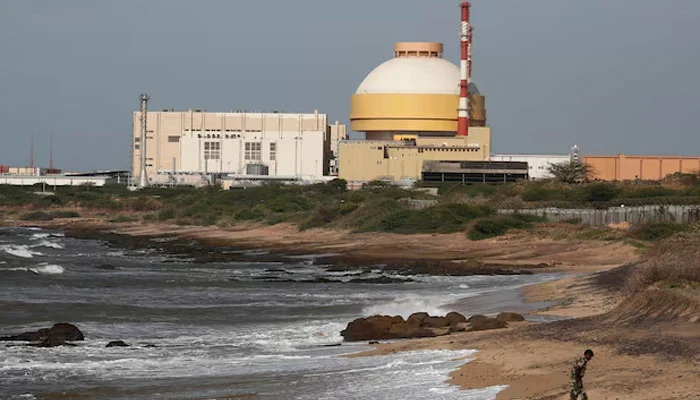
India is taking significant steps to free its nuclear energy sector from government dominance. On Monday, legislation was introduced in Parliament that would permit private companies to construct and operate nuclear power plants, aligning with the government’s goal to position atomic energy as a key component of its clean energy strategy.

ADVERTISEMENT

Foreign companies partnering with Indian firms could also apply for licenses if chosen by the government. Historically, India’s nuclear industry has been tightly controlled since the first reactor went online in 1969, influenced by Cold War geopolitics and restrictions following its 1974 nuclear test.

Currently, state-owned Nuclear Power Corporation of India Limited (NPCIL) manages and operates India’s nuclear reactors. Reuters reported last year that India was exploring investments from domestic private giants like Tata Power, Adani Power, and Reliance Industries, totaling around $26 billion.

The proposed bill, which needs approval from both legislative houses to become law, would enable “persons expressly permitted by the central government” to seek licenses to enter the nuclear field. This marks a major shift from previous decades when only state-backed entities could operate nuclear facilities.

ADVERTISEMENT

India aims to increase its nuclear capacity to 100 gigawatts within the next twenty years — a substantial rise from the current 8.2 GW. The bill, named the Sustainable Harnessing of Advancement of Nuclear Energy for Transforming India Act, 2025, eliminates a clause allowing operators to sue suppliers over defective equipment — a provision that foreign suppliers like General Electric, Westinghouse, and France’s EDF have opposed.

Liability rules are also being adjusted; the bill increases operator liability for large reactors to 30 billion rupees (approximately $330 million), maintains existing compensation caps, and introduces a nuclear liability fund to manage accident claims in line with international standards.

Private companies will also be permitted to import and process uranium. However, activities deemed strategic—such as uranium mining, enrichment, and fuel reprocessing—remain under government control, with licensing required for all operators.

ChatGPT ChatGPT Perplexity AI Perplexity Gemini AI Logo Gemini AI Grok AI Logo Grok AI
Google Banner
Tags: billEnergyGrowthIndianuclearprivate firms
ADVERTISEMENT
Lucas Huang

Lucas Huang

Singaporean tech writer and digital strategist passionate about smart city innovations. Off the clock, he’s either hunting for the best Hainanese chicken rice or cycling through Marina Bay at dusk.

Related Posts

India approves plan to acquire French Rafale fighter jets
News

India approves plan to acquire French Rafale fighter jets

February 12, 2026
Iran may dilute enriched uranium if sanctions are fully removed
News

Iran may dilute enriched uranium if sanctions are fully removed

February 9, 2026
India probes suspected suicide of 3 sisters linked to K-Pop influence
News

India probes suspected suicide of 3 sisters linked to K-Pop influence

February 5, 2026
Russia states India hasn't committed to stopping oil imports
News

Russia states India hasn’t committed to stopping oil imports

February 3, 2026
Next Post

How to Fix Siri Error Using Apple Intelligence

  • About Us
  • Contact Us
  • Advertise
  • Privacy Policy
  • Guest Post

© 2026 Digital Phablet

No Result
View All Result
  • Home
  • News
  • Technology
    • Education Tech
    • Home Tech
    • Office Tech
    • Fintech
    • Digital Marketing
  • Social Media
  • Gaming
  • Smartphones

© 2026 Digital Phablet