Select Language:
Two of the attackers involved in the Bondi Beach shooting that resulted in at least 15 fatalities during a Jewish gathering in Australia on December 14 have roots in Hyderabad, according to officials from India, as reported by The Hindu.
Indian authorities provided information about the gunman, Sajid Akram, 50, who is now deceased, following a background check. Sajid, a resident of Tolichowki in Hyderabad, migrated to Australia in 1998 on a student visa and has only visited India a few times since then, with his most recent trip being in 2022.
A top government official stated that Sajid’s father passed away in 2017 and that Sajid did not attend the funeral rites. Another official added that Sajid’s immediate family remains in Hyderabad, with his elder brother working as a medical doctor. Sajid’s son, Naveed, 24, born in Australia in 2001, also participated in the attack, was shot by police, and is now hospitalized.
The official explained that Sajid completed a bachelor’s degree in commerce in Hyderabad before moving to Australia, where he married a woman of European descent. He retained his Indian passport. Indian authorities do not currently find evidence of any local connections to the attack and have only conducted preliminary investigations based on information from their sources.
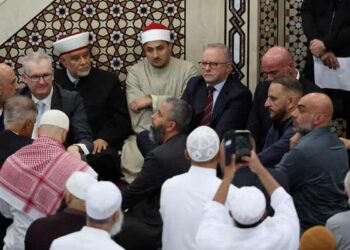
Australian authorities remain in contact with Indian officials as investigations proceed. When asked if Sajid was of Indian origin, Australian Prime Minister Anthony Albanese said the investigation is still ongoing and declined to provide further details to avoid compromising it.
Additionally, Filipino authorities confirmed Sajid Akram’s Indian nationality by citing his travel documents. Sajid and his son Naveed arrived in the Philippines on November 1, with Davao listed as their destination, and they stayed primarily in the country for almost the entire month of November. Immigration officials in Manila confirmed their entry, noting Sajid entered as an Indian national.
Both father and son departed the Philippines on November 28 via a connecting flight from Davao to Manila, en route back to Sydney. There were initial reports suggesting they might have received military-style training in the Philippines, but the military has not verified this. The country has a history of insurgencies, including the brutal siege of Marawi City in 2017, which was fought by ISIS-aligned groups such as Maute and Abu Sayyaf.
Authorities described the attack as potentially inspired by Daesh (ISIS) ideology. Evidence linking to terrorist groups included a vehicle registered to Naveed that contained improvised explosive devices and flags associated with ISIS. Videos have surfaced showing the younger attacker preaching religion outside Sydney train stations, with investigators still trying to understand his path to violence.
This massacre was Australia’s deadliest mass shooting in nearly three decades and is being treated as a terrorist act targeting the Jewish community. The death toll stands at 16, including Sajid, who was shot on the spot, and Naveed, who remains in critical condition. The victims ranged from a rabbi and Holocaust survivor to a 10-year-old girl. Two police officers are also hospitalized in stable but critical condition.
Prime Minister Albanese indicated that the attackers were likely influenced by Daesh ideology, emphasizing that their actions are linked to terrorist organizations, not religion per se.
The Philippine military acknowledged the presence of the suspects but has yet to confirm whether they received any military training in the country, despite earlier suggestions. Mindanao, where the suspects stayed, has a history of insurgent and terrorist activity, including the 2017 conflict in Marawi, which resulted in over 1,000 deaths and displaced hundreds of thousands.
 ChatGPT
 Perplexity
 Gemini AI
 Grok AI