Select Language:
Next year, a new United Nations Secretary-General will be elected to serve a five-year term beginning January 1, 2027.
Current indications suggest several potential candidates, and here’s how the selection process will unfold:
When does the process commence?
The official start occurs when the Security Council’s 15 members and the President of the General Assembly send a joint letter inviting nominations. This proposal is expected by the end of this year. A candidate must be nominated by a UN member country. While traditionally the role rotates geographically, given that António Guterres, from Portugal, was elected in 2016—an Eastern European rotation—it’s anticipated that Latin America could be next. However, diplomats acknowledge candidates from other regions might also emerge.
Who are the candidates so far?
Although formal proceedings haven’t begun, several individuals have already publicly announced their interest:
-
Michelle Bachelet — Chile’s former president, nominated by President Gabriel Boric as of September 23, 2025. Bachelet, the first woman in Chile’s presidency, served twice and was UN High Commissioner for Human Rights from 2018-2022, as well as executive director of UN Women from 2010-2013.
-
Rebeca Grynspan — Costa Rica’s former vice president, nominated by President Rodrigo Chaves as of October 8, 2025. She’s a seasoned politician and economist currently leading UNCTAD.
-
Rafael Grossi — Argentina’s director-general of the International Atomic Energy Agency since 2019, he has openly expressed interest in running. When asked in September 2025 if he would run, Grossi affirmed his intention.
What is the selection process?
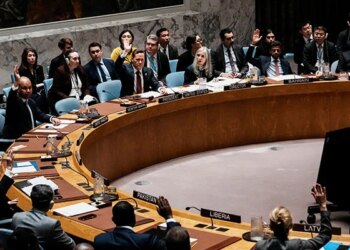
The Security Council will recommend a candidate to the General Assembly early next year. This involves secret straw polls where council members express encouragement, discouragement, or no opinion on each candidate. The five permanent members—U.S., Russia, China, Britain, and France—must come to an agreement, with veto power making their approval essential. Typically, multiple rounds of straw votes may be required; in 2016, six were needed before a consensus was reached on Guterres.
Once the Security Council agrees, it adopts a resolution—generally in private—recommending the candidate to the General Assembly, which usually approves the appointment without much debate. The process is designed to be transparent and inclusive, with recent efforts to allow candidates to present their visions publicly and disclose funding sources to ensure fairness.
What are the main responsibilities of the secretary-general?
Designated as the “chief administrative officer” per the UN Charter, the secretary-general acts as a diplomat, advocate, and executive, overseeing over 30,000 staff and managing the organization’s core budget of $3.7 billion, along with a peacekeeping budget of $5.6 billion. While they lack direct power over military or sanctions decisions—which reside with the Security Council—they wield significant influence through moral authority and diplomatic engagement. Many see the role as more of a moral voice than a command authority, often described as a “bully pulpit.”
Has a woman ever served as secretary-general?
No, but there’s increasing momentum to break that glass ceiling. A September resolution from the General Assembly officially recognized that no woman has served in the role in the organization’s 80-year history. It encourages member states to consider women candidates more strongly in future nominations.
 ChatGPT
 Perplexity
 Gemini AI
 Grok AI