Select Language:
In a Bahrain supermarket, Mahmoud Ali shops as usual, filling his cart. Despite ongoing conflict in the Middle East, store shelves remain stocked, but the impact of the disrupted shipping routes into the Gulf is now evident at checkout.
“There’s no shortage,” he says, “but over the past few days, I’ve noticed a significant rise in the prices of certain food items.” The cost of meat, in particular, has nearly doubled, he adds.
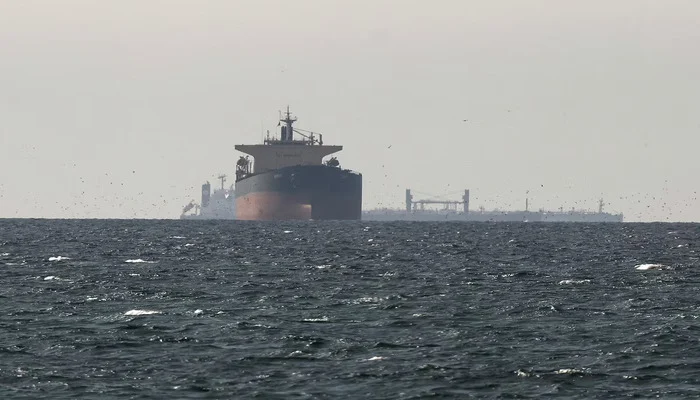
Like many neighboring countries in this dry region, the small Gulf nation depends greatly on imports, especially for food. However, the war that began on February 28 with Israeli and U.S. strikes against Iran has severely affected goods transportation through the vital Strait of Hormuz, which is now effectively closed.
Frederic Schneider, an economist with the Middle East Council on Global Affairs, explains, “Most major ports in the UAE, Qatar, Kuwait, and Bahrain have either suspended or significantly reduced cargo operations.” Additionally, air freight, another critical logistics component, is operating below capacity due to ongoing Iranian drone and missile attacks.
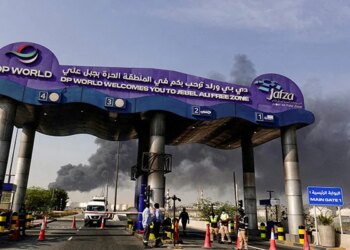
With key ports such as Abu Dhabi, Jebel Ali in Dubai, and Dammam in eastern Saudi Arabia becoming nearly inaccessible, vessels are rerouting to ports located in Oman and the Emirates further south of the strait.
Saudi Arabia is positioning itself as a central supply hub, with open airspace and ongoing maritime traffic to its Red Sea ports. The country has launched initiatives to bolster its transport infrastructure by establishing new logistics routes and operational corridors to manage cargo diverted from its eastern ports, according to officials.
Recent observations by AFP journalists show a steady flow of heavy trucks crossing into Qatar by land. Alternative land routes exist through corridors connecting to the Mediterranean via Syria or Jordan, but these are too congested, costly, and insufficient to compensate for the halt of traditional sea routes, Schneider notes.
Perishable goods, mainly imported from Asia and with limited storage life, are the first to feel the pinch.
‘A Tangible Risk’
The Gulf states’ levels of preparedness vary. Saudi Arabia has direct access to the Red Sea, while the UAE claims to have stockpiled enough supplies to last four to six months. Qatar invested heavily in its reserves after a three-year blockade by neighboring countries starting in 2017.
Bahrain and Kuwait are already experiencing the effects of the conflict at the consumer level. After an initial rush to supermarkets at the onset of the war, Kuwaiti authorities froze prices on certain essential items and subsidized meat imports.
“Overall, prices have stayed relatively stable,” an official from Kuwait’s commerce ministry told AFP, requesting anonymity. “But meat and fish prices have jumped over 30% due to the suspension of Gulf fishing activities and halted imports from Iran, India, and Pakistan.”
The private sector is taking steps to mitigate the effects of the blockade. Lulu, a retail chain operating 280 supermarkets across the region, reports maintaining reserves of non-perishable goods for four to six months and has chartered special flights to bring in fresh produce, meat, seafood, and poultry.
So far, “37 chartered flights have delivered more than 6,000 tons of fresh goods,” according to Lulu’s communications director V Nandakumar. He adds that these increased costs are not yet being passed on to consumers.
Schneider emphasizes, “There is a reasonable level of anticipation, and prices are under control for now.” However, he warns that if the conflict continues for an extended period, there is a tangible threat of prices for imported foods significantly escalating.
 ChatGPT
 Perplexity
 Gemini AI
 Grok AI