Select Language:
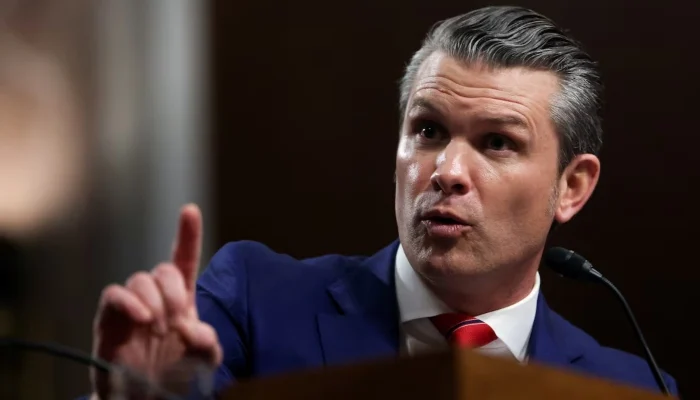
A Pentagon investigation has concluded that U.S. Secretary of Defense Pete Hegseth used Signal on his personal device to send sensitive information regarding planned strikes in Yemen. This action potentially jeopardized American troops if the data were intercepted, according to two sources familiar with the report, which is yet to be publicly released but is expected this week.
The independent Inspector General’s report does not specify whether the shared information was classified at the time, recognizing Hegseth’s authority as defense secretary to determine classification levels. Both the Pentagon and Hegseth himself issued statements asserting he was cleared of wrongdoing. Hegseth tweeted, “No classified info. Total exoneration. Case closed,” on X.
This scrutiny emerges amid mounting concerns over Hegseth’s role in overseeing U.S. strikes against suspected drug vessels in the Caribbean, sparking legal and political debate. Democratic members, including the leading Democrat on the House Armed Services Committee, criticize the findings, with Adam Smith of Washington describing Hegseth as lacking the judgment necessary for his position and showing a disregard for safety protocols.
The controversy intensified after Hegseth disclosed details of an imminent attack against Houthi fighters in Yemen during a meeting with top Trump administration security officials. This included a slip-up where Jeffrey Goldberg, editor-in-chief of The Atlantic, received information about the plans, which he later revealed in an article. Goldberg’s publication, supported by screenshots of Hegseth’s messages, indicated Hegseth discussed the attack, including details about targeting a Houthi leader, roughly two hours before the operation.
The IG’s report states that the classified information was transmitted at a time when it was still deemed sensitive and could have risked operational safety if intercepted. Hegseth denied sharing war plans and refused to be interviewed for the investigation, claiming he only shared information he believed was unclassified and safe to disclose. Despite this, critics argue that sharing such details—even if not specifying identities or exact locations—could have allowed Houthi leaders to evade the attack, risking civilian harm.
Senator Mark Warner, the top Democrat on the Senate Intelligence Committee, noted the investigation revealed additional instances of Hegseth using Signal for official matters, suggesting this was not an isolated case. Warner criticized Hegseth’s judgment, implying a pattern of recklessness.
The inspector general’s review was limited, relying on a small selection of Hegseth’s Signal messages and publicly available screenshots. The controversy highlights broader issues of classified information security and leadership judgment within the Pentagon, especially amidst ongoing debates over military operations in sensitive regions.
 ChatGPT
 Perplexity
 Gemini AI
 Grok AI