
Select Language:
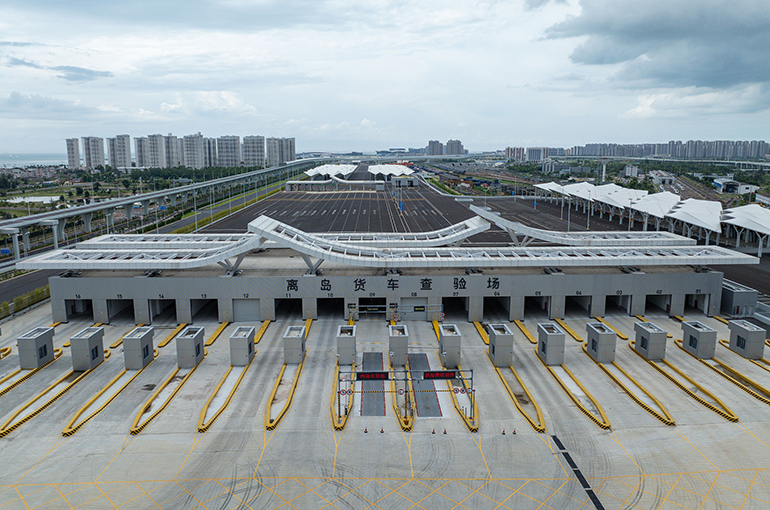
Hainan province is preparing for the implementation of its full customs closure scheduled for December 18. Once in effect, this will mark a significant shift as the southernmost region of China transitions into a special zone under customs supervision, distinct from a traditional free trade zone. The province will initiate independent customs operations across the entire island, introducing a series of tax incentives and preferential policies designed to boost trade and attract investment.
Just six days remain before Hainan establishes its comprehensive customs controls. Under this new framework, goods and individuals will be able to move more freely between Hainan and other countries and regions, while specific measures will be in place to carefully manage the liberalization efforts between the Hainan Free Trade Port and the mainland.
Mitigating risks such as smuggling, taxation, and environmental impact is critical to the success of the new free trade structure. Local authorities have undertaken extensive preparations, developing robust regulatory systems and operational mechanisms to address these concerns.
Between December 2 and December 10, the province conducted its third series of pre-closure stress tests. Coordination across ports, customs, and security agencies proceeded smoothly, with all facilities, equipment, and system platforms functioning reliably.
Policy documents and support structures including lists of taxable items, prohibited and restricted goods, as well as tax exemption rules for processed goods with domestic value-added, have been released to facilitate the transition.
Post-closure, the scope of Hainan’s zero-tariff policy for imported goods will significantly expand. The proportion of imported commodities eligible for zero tariffs will rise from 21% to around 74%, covering roughly 6,000 tax items. This change will allow many more imports to benefit from exemptions on import duties, value-added tax, and consumption tax.
The tax exemption policy for processed goods with domestic value-added was first introduced in July 2021 and has been refined over the past four years. Currently, 129 companies have been approved for this pilot program, which processed domestic sales totaling approximately CNY 11.1 billion (about USD 1.5 billion), resulting in tariff savings of nearly CNY 860 million (USD 121.8 million). After establishing the full customs closure, this policy will extend from pilot regions and specific industries elsewhere on the island to encompass the entire territory.
 ChatGPT
 Perplexity
 Gemini AI
 Grok AI