
Select Language:
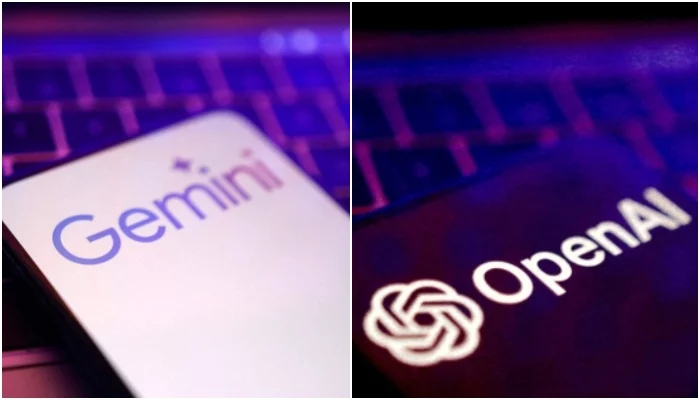
Alphabet is aggressively competing with OpenAI, highlighting Wall Street’s view that Google’s parent company is now a top player in artificial intelligence. This marks a significant shift from just a year ago when investors believed Alphabet was falling behind its rivals and consequently punished its stock.
During its latest earnings call on Wednesday—its first since launching the Gemini 3 model—Alphabet’s executives sounded more assured about their AI advancements, especially as Gemini 3 has garnered user praise and helped Google close the AI development gap.
While the company didn’t directly mention OpenAI, its overall messaging underscored a key change: investments in AI are now generating positive results across all facets of Alphabet’s business. This success is fueling plans to possibly double AI-related capital expenditures in 2026, reaching between $175 billion and $185 billion, primarily to expand AI computing capacity.
In previous statements about AI in 2025, Alphabet focused on how their products were being used and on revenues from their cloud services. CEO Sundar Pichai recently noted, “Our AI investments and infrastructure are driving growth and revenue across the entire organization.”
Google’s confidence in AI-driven revenue growth is supported by gains in both consumer and enterprise sectors. Pichai revealed that the Gemini app, which rivals OpenAI’s ChatGPT, surpassed 750 million monthly active users at the end of December, up from 650 million the previous quarter. However, this still lags behind ChatGPT, which OpenAI’s CEO Sam Altman said had exceeded 800 million weekly active users in October.
“Since Gemini 3’s launch, engagement per user has significantly increased,” Pichai added. Gemini 3 is also integrated into Google Search’s “AI Mode” and powers the enterprise version of Gemini, which now has 8 million paid licenses.
Although Google’s increased AI investment outlook initially caused its stock to fall as much as 6% after hours, strong results from its cloud division—revenue rising 48% last quarter—along with AI-driven growth in other areas reassured investors. These positive signs reaffirm the message: substantial AI spending is justified when it delivers corresponding financial returns.
Over the past year, Alphabet has shifted from trailing to leading the so-called “Magnificent Seven” large-cap tech giants, now being comparable only to Nvidia and Apple, both of which boast market capitalizations of over $4 trillion.
Despite a cautious tone on this year’s capital expenditure plans, Microsoft’s shares recently faced a major decline, partly due to anxieties over its dependence on OpenAI. The company forecasted a slowdown in its fiscal third-quarter spending, down from the record $37.5 billion spent in the last quarter of 2022.
Investors are wary of OpenAI’s continued billion-dollar deals, especially since the company is still losing money, which raises concerns about its ability to sustain those investments. Major tech firms closely linked to OpenAI—like Microsoft and Oracle—have seen their stocks decline; Oracle’s shares have dropped approximately 49% since October, and Microsoft’s have fallen over 20%, while Alphabet’s rose about 36%.
Paul Meeks, a tech research head at Freedom Capital Markets, pointed out that despite Alphabet’s hefty capital spending, market sentiment seems to favor Google over OpenAI for now. “The market is shifting. Last year, every big partnership announcement from OpenAI was celebrated. Now, there’s growing concern about how much revenue might be heavily reliant on OpenAI.”
Given recent deals with Meta and Apple to bolster products and infrastructure, Alphabet’s war chest remains strong. As Eric Clark of the LOGO ETF observed, “If you’re a software company connected to OpenAI, you’re not as attractive right now. Google is on a hot streak.”
 ChatGPT
 Perplexity
 Gemini AI
 Grok AI