Select Language:
Massive floods and landslides have claimed over 900 lives on Indonesia’s Sumatra island, according to the country’s disaster response agency, with concerns rising that hunger could push the death toll even higher.
A series of tropical storms and monsoonal rains have lashed Southeast and South Asia, sparking landslides and flash flooding across regions from the Sumatran rainforest to Sri Lanka’s highland tea plantations.
Over 1,790 fatalities have resulted from recent natural disasters in Indonesia, Sri Lanka, Malaysia, Thailand, and Vietnam.
In the provinces of Aceh and North Sumatra, waters have destroyed roads, buried homes under heavy silt, and severed supply lines.
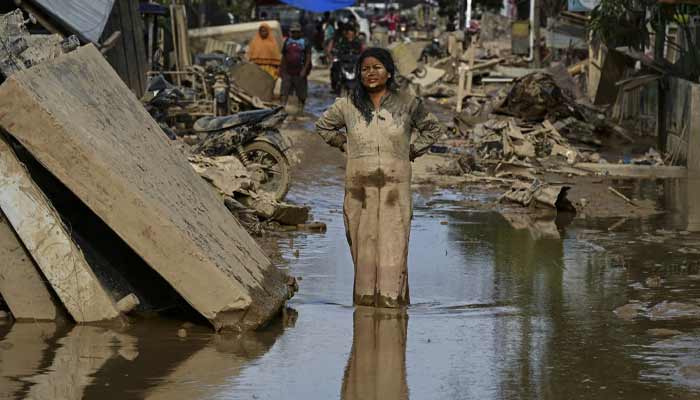
Aceh governor Muzakir Manaf reported that rescue teams are still searching for bodies in “waist-deep” mud.
Starvation now poses a severe threat to remote, hard-to-reach villages.
“Many people lack basic necessities. Many areas—especially in remote parts of Aceh—remain inaccessible,” he explained.
“Young and old are dying not just from the floods but from hunger. That’s the harsh reality,” he added.
Entire villages have been obliterated in Aceh Tamiang, a rainforest-covered area.
Muzakir described the devastation: “Aceh Tamiang is completely wiped out—from the mountains down to the sea. Roads, villages, and districts are now just names on a map.”
Fachrul Rozi, a flood survivor from Aceh, recounted that he spent the past week huddled inside an old shop with others fleeing rising waters.
“We ate whatever we could find and helped each other with whatever supplies we had,” he told AFP.
“We slept packed together, trying to stay safe.”
Munawar Liza Zainal, an Aceh resident, voiced frustration with the Indonesian government, which has so far declined to declare a national disaster alert.
“This is an extraordinary disaster that demands extraordinary measures,” he said, echoing other flood victims.
“If they wait until declaring a disaster later, what’s the use of urgent action now?”
Designating a national disaster would unlock additional resources and streamline response efforts.
Some analysts believe Indonesia hesitated to make such a declaration to avoid revealing that it may not be fully equipped to manage the crisis or to secure foreign aid.
This week, the government maintained it was capable of handling the situation.
The full extent of the destruction is becoming clearer in Sumatra as floodwaters recede and rivers shrink.
Photos from AFP show villagers salvaging furniture caked in mud from flooded homes in Aek Ngadol, North Sumatra.
Humanitarian groups warn that this catastrophe might be a record-breaking event, even for a nation used to natural disasters.
Indonesia’s death toll reached 908 on Saturday, with 410 people still missing, the disaster agency reports.
Meanwhile, Sri Lanka’s death count climbed to 607, with authorities warning that ongoing rains could trigger more landslides.
Thailand has reported 276 deaths, Malaysia two, and Vietnam has at least two fatalities following heavy rains and landslides.
Seasonal monsoons are vital for rice and crop growth in Southeast Asia, but climate change is making these rains more unpredictable and deadly.
Environmentalists and officials also link the severity to ongoing logging and deforestation efforts, which have worsened landslides and flooding in Sumatra.
 ChatGPT
 Perplexity
 Gemini AI
 Grok AI