Select Language:
Millions of young Bangladeshis will cast their votes for the first time this Thursday in a historic election that will shape the nation’s leadership. This comes after a 2024 student-led uprising that effectively ended former Prime Minister Sheikh Hasina’s authoritarian rule.
Individuals aged 18 to 27 constitute 44% of the 129 million eligible voters. Many of these young voters admit they didn’t participate in voting during Hasina’s 15-year grip on power.
Elections during her tenure were plagued with claims of extensive rigging and bans on opposition parties.
Faijullah Wasif, 33, a university official preparing to vote for the first time, shared that he didn’t vote while Hasina was in office because he believed his vote wouldn’t matter.
“I mostly stayed away out of fear and anxiety,” he explained. “I just wasn’t interested.”
The large cohort of young voters has prompted political parties to adjust their campaign strategies and messaging.
Digital platforms now play a central role in campaigning, with parties investing heavily in social media outreach, from Facebook videos to TikTok reels.
Hasina’s former ruling party, the Awami League, is now disqualified from participating in this election.
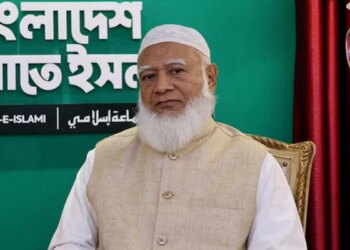
Instead, opposition groups—such as the Bangladesh Nationalist Party (BNP) and its allies, along with a coalition led by Jamaat-e-Islami, the country’s largest religious party—are contesting.
Ashfah Binte Latif, 21, a student at Dhaka University, said her parents reminisced about elections from before Hasina’s era, when voting day was celebrated like a festival.
“Now that we’ve managed to change the system, I am very excited,” she remarked.
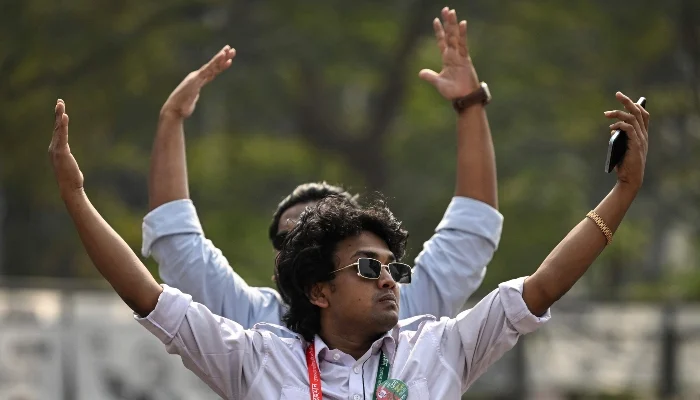
The National Citizen Party (NCP), created by student leaders who spearheaded the recent protests, has allied with Jamaat-e-Islami.
Latif expected more leadership from the youth, but remains hopeful for change.
“We hoped young people would lead us—and in many ways, they have,” she said. “If they fail, it’s a failure for all young people.”
The unrest that sparked in 2024 began on university campuses, where students opposed a government quota system for civil service jobs, claiming it excluded them from employment opportunities.
A year and a half later, Bangladesh’s economy remains delicate, and many recent graduates continue to struggle to secure their first jobs.
Election expert Md Abdul Alim, a former member of the country’s election reform commission, anticipates a high youth turnout.
“These young voters will carry their frustration into the polls, and they will vote,” he predicted.
Of about 2,000 candidates vying for 350 seats—with roughly 1,400 running for the first time—over 600 are under the age of 44, according to electoral commission data.
Wasif believes these fresh faces will benefit Bangladesh.
“Our trust in young people is very strong, and our hopes are high,” he said.
“Since youth led this change, I believe they will radically transform Bangladesh’s political landscape,” he added.
Latif expressed hope that the new leadership would be more democratic.
“A government that values dissenting voices instead of viewing them as enemies, that respects them,” she said.
 ChatGPT
 Perplexity
 Gemini AI
 Grok AI