Select Language:
China is increasingly focusing on Xinjiang Uygur Autonomous Region, Inner Mongolia Autonomous Region, and Tibet Autonomous Region to meet the country’s rising energy demands over the next decade, according to a senior engineer at State Grid Corporation.
Electricity consumption in China is projected to grow at a steady pace over the coming ten years, with an estimated annual increase of approximately 5.6% during the period from 2021 to 2030, and about 4.3% from 2031 to 2035. This forecast was shared at a recent power industry forum.
After two decades of growth, Sichuan Province—an essential hub for China’s West-to-East Power Transmission project—has transitioned from a net energy exporter to an importer of electricity. Future supply is expected to be secured through energy sources from Xinjiang, Inner Mongolia, and Tibet, especially once the massive dam in the lower Yarlung Zangbo River, valued at around 1.2 trillion RMB (approximately 167.2 billion USD), becomes operational.
In terms of regional power generation, Inner Mongolia produced 818 billion kilowatt-hours last year, representing 8.7% of China’s total and making it the leading region nationwide. Xinjiang produced approximately 531.3 billion kWh, ranking fifth.
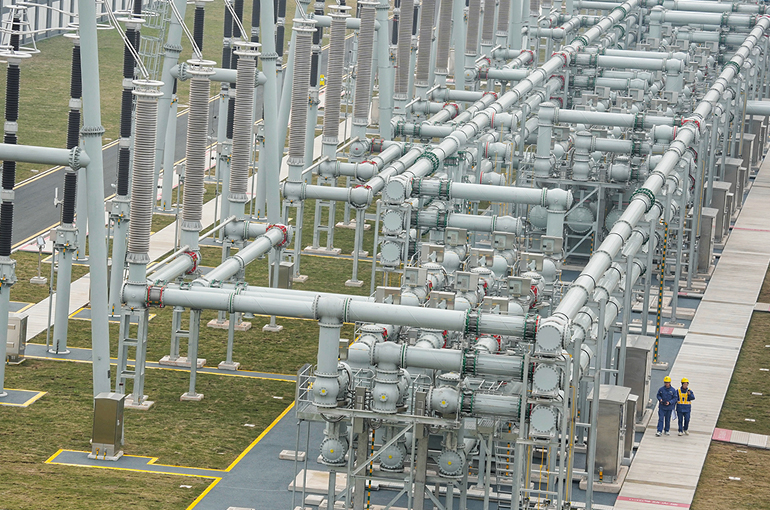
Data from local authorities shows that last year, Inner Mongolia transmitted 648 billion kWh via its ultra-high-voltage transmission network, while Xinjiang’s power exports reached a record-breaking level of over 126 billion kWh. Renewable energy sources largely fueled this growth.
The region of Inner Mongolia plans to continue developing large-scale wind and solar power bases in the Gobi Desert. The goal is to add 40 million kW of renewable energy capacity this year, pushing total installed capacity beyond 170 million kW, with a target for electricity exports exceeding 100 billion kWh from these renewable sources.
Additionally, Tibet’s new hydropower project, which commenced construction on July 19, is expected to reach an installed capacity between 60 and 70 million kW—comparable to five Three Gorges Dams, the world’s largest hydropower station.
 ChatGPT
 Perplexity
 Gemini AI
 Grok AI