Select Language:
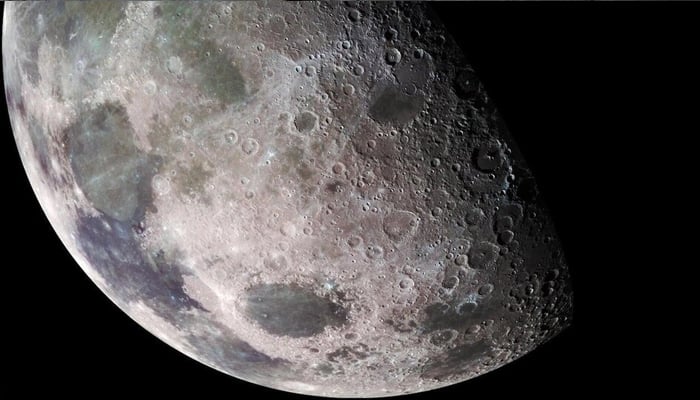
As interest in lunar exploration continues to grow, experts are cautioning that avoiding collisions in lunar orbit may become a significant challenge. Over the last two years, twelve missions have been attempted—nearly half of which are by private companies.
According to The Conversation, the space between Earth and the Moon, known as cislunar space, is enormous—about 2,000 times the volume of Earth’s orbital zone. Still, spacecraft tend to stick to a small number of stable lunar orbits, which could lead to a higher-than-expected risk of paths crossing. Monitoring these objects is also a challenge; most sensors on Earth struggle to track entities far from our planet, partly because of the Moon’s bright glare.
Research published in March 2025 in the Journal of Spacecraft and Rockets indicates that even with just 50 satellites in lunar orbit, each might need to perform maneuvers four times annually to avoid potential collisions. The Indian Space Research Organisation (ISRO) has already reported maneuvering its Chandrayaan-2 spacecraft three times in four years, despite only six crafts being in orbit at the time.
Experts suggest that improved coordination and better tracking technology could reduce unnecessary adjustments. NASA’s lunar traffic monitoring program compares operators’ data on current and upcoming spacecraft positions to identify possible close approaches. The U.S. Air Force Research Laboratory is also developing the Oracle system, with its first satellite scheduled for launch in 2027. Positioned at a Lagrange point, it will detect objects that ground-based sensors cannot see.
The United Nations Committee on the Peaceful Uses of Outer Space has assembled a team to address coordination issues, while the Outer Space Treaty requires nations to avoid harmful interference—though it doesn’t specify how to do so.
With NASA planning its next crewed lunar mission for early 2026, along with increasing commercial and government missions, specialists emphasize that international cooperation is essential for safe, sustainable lunar exploration.
 ChatGPT
 Perplexity
 Gemini AI
 Grok AI