Select Language:
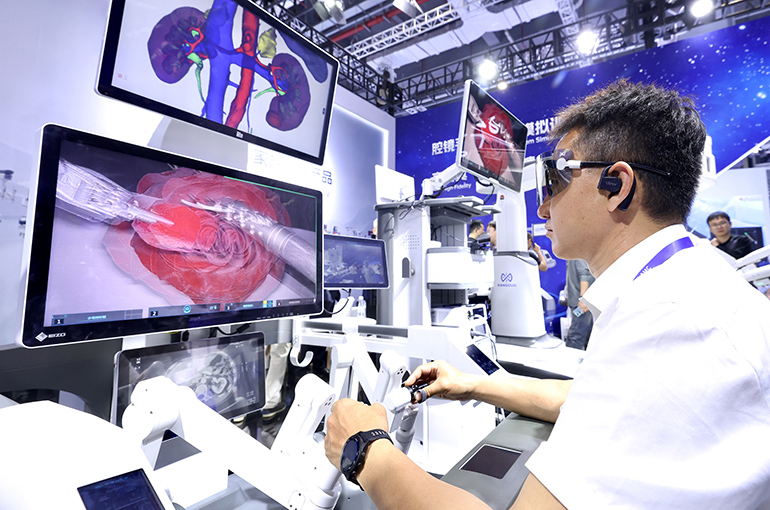
Artificial intelligence is revolutionizing the healthcare sector, yet experts emphasize the importance of recognizing and addressing its associated risks. While AI errors in other fields may lead to financial setbacks, mistakes in healthcare can have life-altering consequences, according to professionals at the Boao Forum for Asia.
It’s crucial to establish clear boundaries of human responsibility when employing AI tools, especially in medical settings. AI can struggle with complex ethical decisions, such as whether a 90-year-old patient with Alzheimer’s should undergo conservative or aggressive treatment, and cannot replace human judgment that involves values and ethics.
Medical practitioners can blend technology with their experience and compassion to make empathetic choices for patients. AI should serve only as an aid in diagnosis and treatment, since it cannot comprehend the patient’s emotional state, social background, or personal values.
The healthcare industry is poised for significant transformation due to AI’s expanding capabilities. As much of human biology is still not fully understood, AI offers an opportunity to deepen scientific knowledge and may usher in a new era in life sciences.
For instance, AI-based cervical cancer screening technology has more than doubled detection rates in rural areas across central and western China. Additionally, a pathology model developed in collaboration with a major medical university has cut lung cancer genetic testing time from weeks to just a minute.
These faster diagnostic results not only streamline patient care but also help reduce overall healthcare costs. Doctors must learn how to utilize AI effectively; those who do are more productive and better equipped to serve their patients.
AI is accelerating the evolution of healthcare, opening new avenues for drug development and boosting efficiency. It can detect diseases earlier at the molecular and genetic levels, outperforming traditional imaging methods and enabling personalized treatment plans tailored to individual patients.
 ChatGPT
 Perplexity
 Gemini AI
 Grok AI