Select Language:
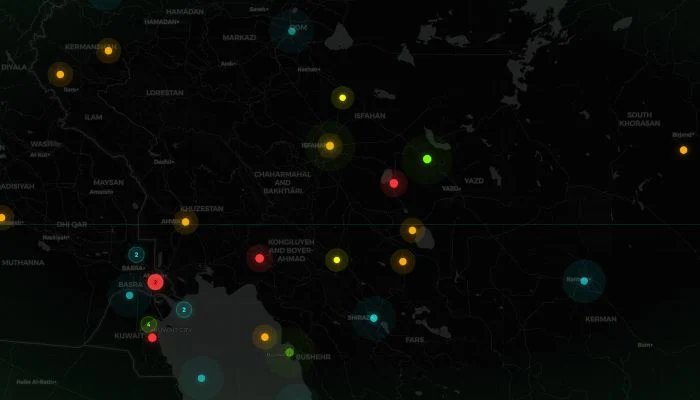
The AI dashboard depicts military activity around Cyprus, with frigates on display and aircraft heading toward the Gulf region. A breaking news alert highlights unverified reports of a drone attack on Dubai. As of that Friday, over 3,200 viewers were engaged with “Monitor the Situation,” a platform tracking everything from world leaders’ locations to internet disruptions.
These free AI-powered tools transform raw data into interactive global maps that offer comprehensive insights, although their accuracy isn’t guaranteed. The increased interest in such platforms coincides with escalating Middle Eastern conflict, along with memes playfully mocking those who desire a movie-style control room.
Elie Habib, creator of the “World Monitor” AI dashboard, explains that this fascination stems from a human desire for omniscient perspectives—almost like a divine view. Habib, CEO of Middle Eastern music streaming service Anghami, reports that “World Monitor” attracted 4.4 million visits since its launch in January. Based in Dubai and originally envisioning it as a “geopolitical Bloomberg Terminal,” Habib emphasizes his intention isn’t profit-driven, especially during wartime.
The platform integrates over 450 data sources with a customizable interface featuring live webcams and headlines curated by AI. Users can track protests, GPS interference, earthquakes, and other real-time events anywhere on the map. Habib notes that he’s working on refining signal extraction to filter out noise, as too much unchecked data can overwhelm.
Using AI, Habib rapidly “vibe-coded” his website over a weekend—a process that would otherwise take years of manual coding. The source code of “World Monitor” is open for modifications, encouraging community input. However, experts warn that despite its engaging design and real-time data, users shouldn’t rely solely on these sites for accuracy. Wei Sun, principal analyst for AI at Counterpoint Research, remarks that while the dashboards aren’t just “eye-candy,” they aren’t definitive truth sources either. She highlights the risk of AI “hallucinations,” where models generate false or misleading connections.
Inside the modern psyche, these platforms fulfill a craving for quick synthesis and a sense of control amid chaos. Some sites also incorporate chat rooms to foster community engagement during unfolding events. This amplified interest is partly fueled by prediction markets where users bet on outcomes like election results or political upheavals—some live feeds from such markets are integrated into these dashboards.
Regarding mainstream news agencies like AFP or Reuters, Sun suggests they shouldn’t worry excessively but should recognize that such AI dashboards push traditional media toward becoming more trusted and explanatory sources. The disruption isn’t about replacement but about elevating the role of reputable vetting and analysis in a rapidly changing information landscape.
 ChatGPT
 Perplexity
 Gemini AI
 Grok AI