Select Language:
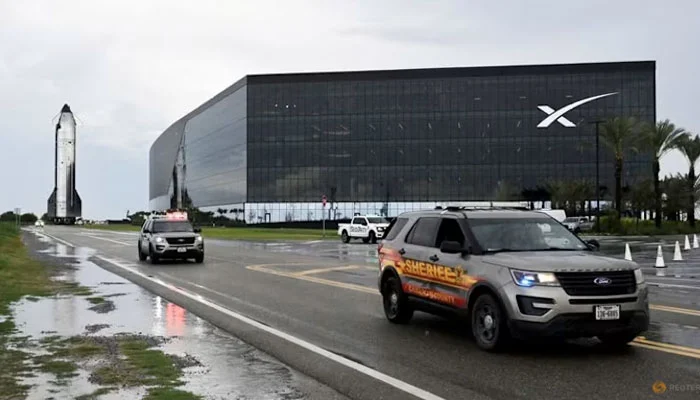
Elon Musk announced on Monday that SpaceX has completed the acquisition of his AI startup, xAI, in a record-breaking deal that aligns Musk’s ambitions in artificial intelligence and space exploration by merging the rocket and satellite company with the developer of the Grok chatbot.
Reported initially by Reuters last week, this deal marks one of the most significant mergers in the tech industry to date. It combines a space and defense contractor with a rapidly expanding AI firm, whose expenses are mainly driven by chips, data centers, and energy. The move could also enhance SpaceX’s plans to develop data centers as Musk takes on competitors such as Google (Alphabet), Meta, Amazon-backed Anthropic, and OpenAI in the AI landscape.
Sources familiar with the matter estimate the deal values SpaceX at around $1 trillion and xAI at approximately $250 billion.
Musk expressed enthusiasm about the merger, stating, “This is not just the next chapter but the next book in SpaceX and xAI’s mission: scaling to create a sentient sun to better understand the universe and extend consciousness among the stars!”
This acquisition sets a new record as the world’s largest merger and acquisition deal, surpassing the previous record held for more than two decades when Vodafone acquired Germany’s Mannesmann in 2000 for $203 billion.
Following the merger, shares of the combined entity are expected to be valued at approximately $527 each, according to another insider. SpaceX, which recently was valued at $800 billion in a private share sale, is already the most valuable privately held company globally. xAI, last valued at about $230 billion in November, also significantly elevates the combined company’s valuation.
The move comes as SpaceX prepares for a major public offering later this year, which could value the company at over $1.5 trillion, sources say.
Neither SpaceX, xAI, nor Musk responded immediately to requests for comment.
This deal further integrates Musk’s diverse business ventures into a cohesive and mutually supportive ecosystem—sometimes called the “Muskonomy”—that includes Tesla, Neuralink (a brain-chip developer), and The Boring Company (a tunnel construction firm).
Musk has a history of merging his companies. He merged social media platform X into xAI through a share swap last year, providing the AI startup access to X’s data and distribution channels. Additionally, in 2016, Musk used Tesla stock to acquire SolarCity, a solar-energy business.
Regulatory bodies and investors may scrutinize this deal due to Musk’s multiple leadership roles across different firms, potential conflicts of interest, and the movement of engineers, proprietary technology, and contracts among his companies. SpaceX also holds billions of dollars in federal contracts with NASA, the Department of Defense, and intelligence agencies—all of which have the authority to review mergers for national security risks.
 ChatGPT
 Perplexity
 Gemini AI
 Grok AI