Select Language:
On November 14, 1979 — just ten days after Iranian students seized the US embassy in Tehran — then-President Jimmy Carter issued Executive Order 12170. This order instantly froze approximately $8 billion in Iranian government assets held in the United States. The action was carried out through the US Treasury’s Office of Foreign Assets Control, marking the start of America’s modern sanctions campaign against Iran.
As sanctions intensified, major global banks and corporations like Citibank, Chase Manhattan, Bank of America, HSBC, Standard Chartered, BNP Paribas, Deutsche Bank, Commerzbank, Credit Suisse, and Barclays, along with energy giants Shell, Total, ENI, and industrial leaders like Siemens, General Electric, and Boeing, all distanced themselves from Iran. This collective withdrawal left Iran increasingly isolated financially.
Iran faced the urgent need to convert its oil revenues into foreign currency usable on the international stage. It also required funds to procure missile components, electronics, and weapons through global supply networks. Iran relied heavily on proxy groups like Hezbollah and the Houthis for political influence and military operations. To keep these operations running, Iran had to develop covert banking channels for cross-border transactions, utilizing front companies and shadow traders to continue selling oil despite sanctions. Drones, cash shipments, and logistical connections across Iraq, Syria, and Lebanon became vital cogs in Iran’s clandestine power-building machine. Essentially, Iran didn’t just depend on oil revenue; it depended on a sophisticated global infrastructure to bypass sanctions and turn oil into influence.
For nearly five decades, Dubai served as the nerve center for Iran’s financial evasion network—a neutral trading hub where money from tangled origins could flow unimpeded. Despite attempts by the US Treasury over two decades to dismantle this web, Dubai’s economic independence and strategic geographic position kept the architecture largely intact, with the UAE often choosing not to cooperate fully.
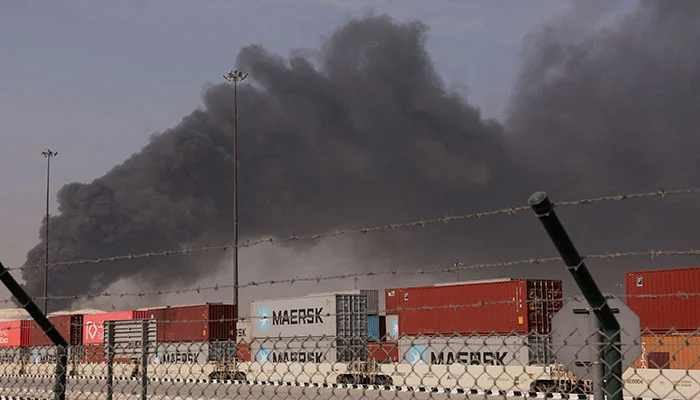
On February 28, 2026, Iran launched a barrage of missile, drone, and cruise missile attacks against the UAE. Why would Iran strike its own financial lifeline? Perhaps regime survival trumped economic logic, or maybe the relationship with the UAE had become too compromised—especially since the UAE had been quietly coordinating with Israel since the Abraham Accords of 2020. Alternatively, it could reflect a deeper institutional failure: the IRGC, operating as a parallel state, may have made decisions outside of Iran’s national interests, acting on its own agenda rather than central government strategy. Instead of consulting the cabinet, the missile commands appeared to follow their own calculations.
From February 28 to March 4, Iran launched a total of 189 ballistic missiles, 941 drones, and three cruise missiles at the UAE—more than a thousand projectiles in just six days.
The Wall Street Journal reports that the UAE is now considering shutting off Iranian access to billions of dollars stored within its borders. After nearly five decades of building a financial architecture in Dubai—one that US authorities never fully dismantled—Iran’s recent attack might finally force Dubai to sever its longstanding links, effectively doing what Washington has spent twenty years trying to achieve.
In essence, Iran’s missile assault was not merely an attack on a city but potentially a strike against its own covert financial infrastructure. This could be the moment that finally pushes the last banks to cut Iran loose, leaving Tehran without the financial channels it has relied on for so long.
 ChatGPT
 Perplexity
 Gemini AI
 Grok AI