Select Language:
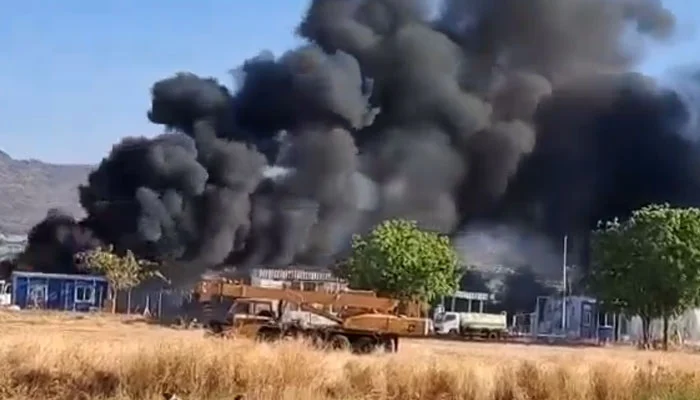
Six UN peacekeepers from Bangladesh were killed Saturday in a drone attack in Sudan’s southern Kordofan region, according to the UN mission, with Dhaka strongly condemning the act. The United Nations Interim Security Force for Abyei (UNISFA) reported that “six troops lost their lives and six others were injured,” including four seriously, when a drone struck their camp in Kadugli, the capital of South Kordofan. All the victims were from Bangladesh.
UN Secretary-General Antonio Guterres denounced the “horrific” assault, stating it “could be considered a war crime under international law.” He added, “Attacks like today’s in South Kordofan against peacekeepers are indefensible. Accountability must be pursued.” Bangladesh’s interim leader, Muhammad Yunus, expressed his deep sorrow over the incident, confirming six deaths and eight injuries. He urged the UN to provide any necessary emergency assistance to his country’s personnel and assured that Bangladesh will support the families during this difficult time.
The Bangladeshi foreign ministry also issued a strong condemnation of the attack. UN peacekeepers are stationed in Abyei, a contested area between Sudan and South Sudan.
Earlier, a medical source told AFP that the strike on a UN facility in Kadugli resulted in at least six fatalities, believed to be UN staff members. Witnesses described the incident as a drone strike on the UN compound in the city. The Sudanese army released footage showing fires and smoke rising from the UNISFA base. The government in Port Sudan, aligned with the military, condemned the attack and accused the paramilitary Rapid Support Forces (RSF) of being responsible.
The Sudanese Sovereignty Council, led by Army General Abdel Fattah al-Burhan, called it a “dangerous escalation.” Meanwhile, the RSF issued a statement denying any involvement, rejecting claims of an airstrike targeting the UN headquarters and dismissing accusations that they used a drone.
Sudan’s Prime Minister, Kamil Idris, labeled the rebel militia involved in the conflict as a terrorist organization and called on the UN to hold the perpetrators accountable. Kadugli, which saw famine declared in early November, has been under siege by the RSF for over a year and a half.
Following their late-October seizure of El-Fasher, the RSF has advanced east into the oil-rich Kordofan region, which is divided into three states. This expansive agricultural area lies between RSF-controlled Darfur to the west and government-held zones in the north, east, and center, playing a strategic role for supply routes and troop movements.
Since April 2023, the RSF has been fighting the Sudanese military, deploying fighters, drones, and allied militias in the fertile region. Analysts believe the RSF aims to break through the military’s defenses around central Sudan, potentially paving the way to recapture Khartoum.
Recently, strikes on a kindergarten and hospital in South Kordofan’s Kalogi killed 114 people, including 63 children, according to the World Health Organization. The ongoing conflict has resulted in tens of thousands of deaths, millions displaced, and one of the world’s worst humanitarian crises. Diplomatic efforts to bring peace have so far failed. Last month, then-U.S. President Donald Trump expressed a desire to end the conflict after talks with Saudi Crown Prince Mohammed bin Salman, but this initiative has not yet resulted in concrete actions.
 ChatGPT
 Perplexity
 Gemini AI
 Grok AI