Select Language:
- Families are leaving Delhi due to health concerns from air pollution.
- PM2.5 levels, which can cause cancer, have increased by 60 times the WHO recommended limits.
- A study links 3.8 million deaths in India from 2009 to 2019 to air pollution.
BENGALURU: Pollution levels in India’s capital influenced Natasha Uppal and her husband’s choice about having children — whether to raise their child away from the city or remain childless.
New Delhi and its metro area, home to over 30 million residents, routinely ranks among the world’s most polluted cities.
Uppal, a lifelong resident, often thought about relocating — especially on days when indoor air purifiers hummed and she suffered from severe migraines.
The decision became clearer when they decided to try for a baby.
“When we considered what kind of environment we could offer our child in Delhi,” she shared with AFP, “the air pollution presented a major obstacle to many of those aspirations.”
In 2022, they moved to Bengaluru, and shortly after, Uppal found out she was pregnant.
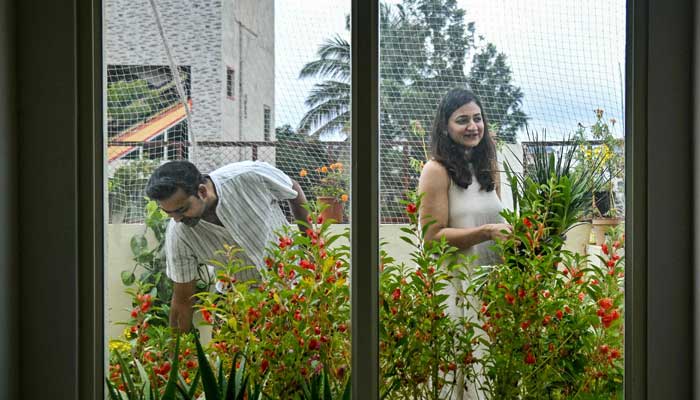
They are among a growing number of families leaving Delhi due to health issues caused by air pollution.
Uppal, who is 36 and leads the maternal health group Matrescence India, considers relocating the “best decision.”
Bengaluru’s air pollution sometimes peaks at three times the WHO limit but remains well below Delhi’s persistent haze — enabling her son to go outside as often as he wishes.
“Clean air is a fundamental human right,” she emphasized. “Everyone should be able to take it for granted.”
3.8 million deaths
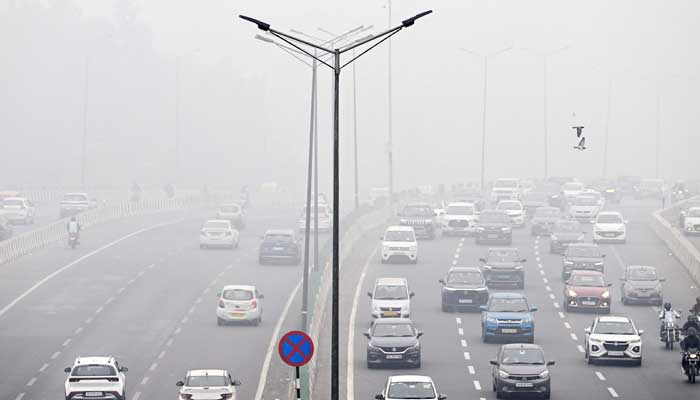
Each winter, Delhi is engulfed in a thick, toxic smog, a mix of crop-burning fumes, factory emissions, and heavy traffic.
PM2.5 particles — tiny, cancer-causing particles that can enter the bloodstream — have soared to 60 times the limits recommended by the WHO.
Despite commitments to improve air quality, measures like partial vehicle bans or mist-spraying water trucks have made little difference.
This year, officials have announced plans for cloud seeding trials to reduce pollution.
A recent study published in The Lancet Planetary Health estimated that 3.8 million deaths in India between 2009 and 2019 were linked to air pollution.

The UN children’s agency warns that polluted air greatly increases the risk of respiratory infections among children.
For Vidushi Malhotra, 36, her breaking point came in 2020 as her two-year-old son repeatedly fell ill.
“We had three air purifiers running nonstop, and still needed more,” she recalled.
By the following year, Malhotra, her husband, and their son moved to Goa. She began encouraging others to follow her lead, sparking what she calls a “mini-movement.” A few friends did.
“It’s heartbreaking to watch my loved ones struggle with this,” she said. “That truly saddens me.”
Nebulizers, inhalers
Meanwhile, Delhi resident Roli Shrivastava remains in the city but lives with constant worry.
The 34-year-old keeps inhalers for her allergy to smoke and nebulizers on hand for her toddler, whose cough worsens every winter.
“Doctors told us winter will be tough,” she explained. “They just said, ‘When your kid starts coughing at night, start nebulizing immediately — don’t even call us.’
As colder weather approaches, Shrivastava is preparing to spend more time indoors, limit outdoor activities for her son, and monitor air quality daily.
Whenever her family visits Chennai, her son’s health noticeably improves.
“His runny nose clears, and his cough disappears,” she said.
Both she and her husband, who work with a global advocacy organization, admit they would have left Delhi long ago if they could find better job opportunities elsewhere.
Relocating is always on their minds.
“Given the current trajectory, Delhi no longer feels like a suitable place to raise children — at least in terms of air quality.”
 ChatGPT
 Perplexity
 Gemini AI
 Grok AI