
Select Language:
Delegates and medical experts participating in this year’s national policy discussions are emphasizing the need for clearer boundaries, enhanced data security measures, and well-defined accountability frameworks in the use of artificial intelligence within healthcare.
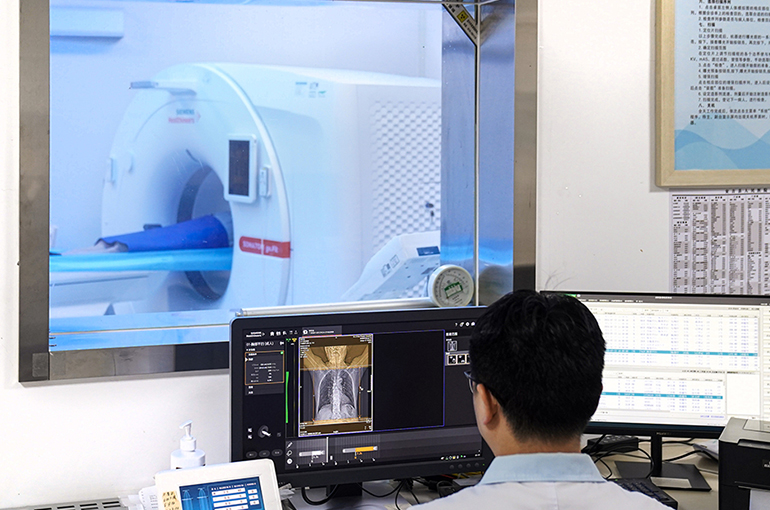
AI has already demonstrated its utility in medical imaging, pathological assessments, and disease screening at community healthcare levels. Additionally, surgical robots are starting to show promising capabilities, according to a leading researcher and medical professional involved in the country’s top political advisory body.
As technological advancements and algorithms improve, AI is expected to eventually surpass even the most skilled physicians, transitioning from a supportive role to an autonomous diagnostic system capable of independent decision-making.
However, critical questions remain unresolved, notably how to safeguard patient privacy and determine liability when AI misjudges. These issues are currently under debate, with solutions anticipated to evolve as industry experience accumulates over time.
Establishing clear operational limits for AI in clinical environments is essential. Healthcare providers must maintain the ability to critically evaluate AI outputs and assume full responsibility for patient safety.
The development of AI in healthcare has been hindered by hospitals’ reluctance to share data. Many institutions should progress from a stance of hesitation to one of compliance-based sharing. Implementing transparent regulations, traceable technical safeguards, and principles such as minimal data use are recommended. Tiered data management systems and blockchain-backed digital contracts could help ensure accountability, with clearly defined data ownership rights and informed consent protocols.
Further, there is a call to establish a nationwide healthcare data-sharing platform. Leveraging emerging technologies like privacy computing and blockchain, such a platform could facilitate compliant, high-quality data exchange, supporting the training of medical AI systems effectively.
 ChatGPT
 Perplexity
 Gemini AI
 Grok AI