Select Language:
A massive storm moving across large parts of the United States has resulted in at least 10 fatalities, prompted road closure warnings, canceled over 19,000 flights since Saturday, and caused power outages affecting more than 840,000 customers nationwide. Tennessee reports over 300,000 residents without electricity, while Texas confirms three deaths, including a 16-year-old girl in a sledding accident. Louisiana has seen two deaths due to hypothermia.
In New York City, Mayor Zohran Mamdani announced that five individuals had been found dead outdoors during the freezing weekend. Although he didn’t specify if weather conditions were the direct cause, he emphasized the extreme cold’s dangers, stating, “There is no more powerful reminder of the danger of extreme cold.”
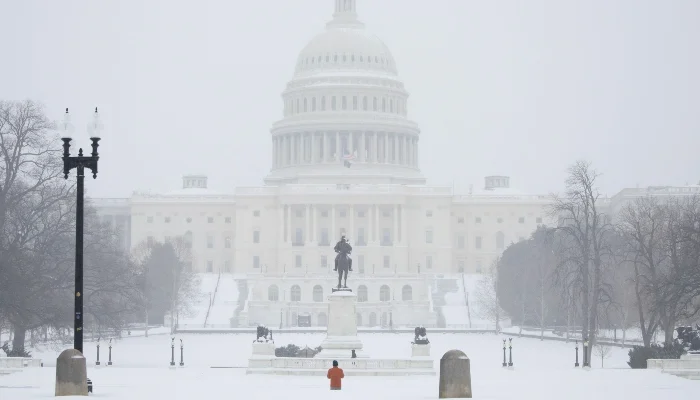
The storm also brought snow, sleet, and freezing rain to densely populated cities like Philadelphia, Boston, and New York, with authorities advising residents to stay indoors whenever possible. Emergency declarations cover at least 20 states plus Washington, D.C. As the cold system advances northeast, heavy snow and ice swept through these urban centers. Federal offices in many locations have been closed preemptively for Monday, and major airports in Washington, Philadelphia, and New York have canceled nearly all flights for the day.
President Donald Trump, sheltering at the White House, took to his Truth Social platform on Saturday, saying, “We will continue to monitor, and stay in touch with all States in the path of this storm. Stay Safe, and Stay Warm!”
The storm originates from an expansive polar vortex—an Arctic low-pressure system that, under certain conditions, stretches into an oval shape, dispersing frigid air across North America. Experts suggest that such disruptions may be linked to climate change but acknowledge that natural variability also plays a significant role. Trump questioned this connection, asking, “WHATEVER HAPPENED TO GLOBAL WARMING???”
The National Weather Service warns that the persistent ice and cold can cause prolonged power outages, extensive tree damage, and hazardous travel conditions, even in regions less accustomed to severe winter weather. Cold temperatures are expected to remain dangerous for up to a week in the Northern Plains and Upper Midwest, with wind chills possibly dipping below -50°F (-45°C), causing frostbite within minutes.
Power outages continue to escalate, especially in the southern states where cold temperatures and ice have knocked out services for hundreds of thousands. State officials have advised residents to limit travel and stay indoors, emphasizing the life-threatening nature of the cold weather.
 ChatGPT
 Perplexity
 Gemini AI
 Grok AI