Select Language:
Cuba’s leader stated Tuesday that the U.S. would face “resistance that cannot be broken” if it attempts to seize control of the impoverished island. Meanwhile, communist authorities are rushing to restore power after a nationwide blackout.
The Cuban government is under mounting pressure—Washington is enforcing an oil embargo and openly seeking an end to the nearly 70-year-long U.S.-Cuba standoff.
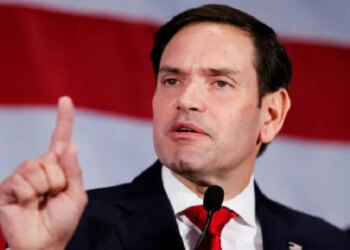
U.S. Secretary of State Marco Rubio criticized Cuba’s recent decision to permit exiles to invest in and own businesses, saying it falls short of the free-market reforms the Trump administration demands.
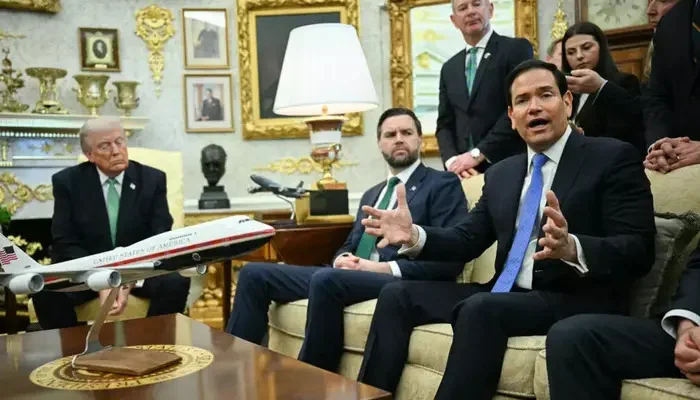
“What they announced yesterday isn’t enough. It’s not going to resolve the issues. They still have big decisions to make,” Rubio, a Cuban-American and vocal opponent of the ruling party, told reporters at the White House.
President Donald Trump, who has exerted pressure on Cuba’s communist government, declared Monday that he plans to “take” Cuba, hinting that action would come soon.
However, Cuba’s President Miguel Diaz-Canel responded with defiance, asserting, “In the face of the worst-case scenario, Cuba guarantees unyielding resistance to any outside aggressor,” in a statement posted on X.
The country is open to negotiations with Washington and welcomes more investment, but it refuses to discuss changing its political system, according to an envoy speaking to AFP on Tuesday.
Tanieris Dieguez, Cuba’s deputy chief of mission in Washington, emphasized that there are many issues to discuss but that neither side should demand regime change as part of the talks.
“Nothing related to our political system or constitutional framework will be part of the negotiations,” she said. “Cuba only asks for respect for our sovereignty and our right to self-determination.”
The New York Times, citing anonymous U.S. officials, reported that the Trump administration had called for Cuba to oust Diaz-Canel, who is viewed as resistant to reform. Rubio dismissed this report as “fake news,” accusing media outlets of relying on “charlatans and liars” with false sources.
Monday’s total blackout highlighted Cuba’s fragile economy. The country lost Venezuela as a regional ally and oil supplier earlier this year after a U.S.-backed military intervention ousted Venezuela’s socialist leader Nicolas Maduro.
Power was partially restored early Tuesday, reaching around 45% of Havana’s 1.7 million residents. Olga Suarez, a 64-year-old retiree, expressed concern about the blackout lasting and affecting her limited food supplies, saying, “We’re used to it because most nights we go to bed and wake up without electricity.”
Adding to the turmoil, an earthquake measuring 5.8 magnitude struck off Cuba’s coast early Tuesday, with no reports of casualties or damage.
Cuba’s aging and poorly maintained power grid often experiences outages of up to 20 hours daily. Fuel shortages have worsened the situation, especially since Maduro’s removal, which cut off Cuba’s oil supply.
Since January 9, Cuba has not imported any oil, impacting the power sector and forcing airlines to reduce flights, hurting tourism—one of its main revenue sources.
Trump has explicitly stated he wants the Cuban government ousted.
“All my life, I’ve wondered when the U.S. would act against Cuba,” Trump told reporters Monday. “I believe I’ll have the honor of taking Cuba,” he added. “Whether I free it or take it—I think I can do whatever I want with it. Right now, it’s a very weakened country.”
 ChatGPT
 Perplexity
 Gemini AI
 Grok AI