Select Language:
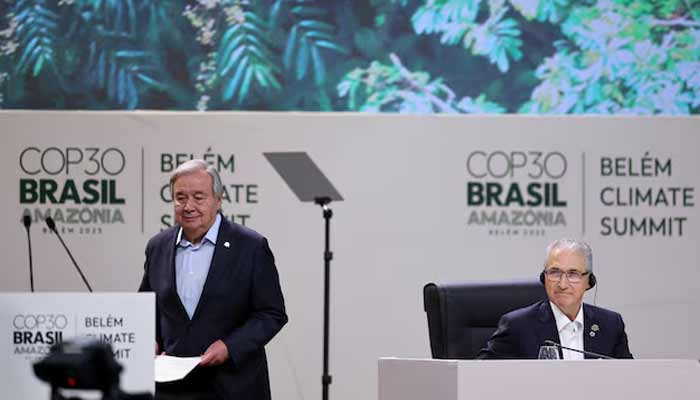
The COP30 climate summit faced a significant dispute Friday over the ongoing role of fossil fuels, as Brazil, the host country, removed its previous proposal for a global plan to phase out oil, gas, and coal from the draft agreement.
A deal draft issued early Friday omitted any mention of fossil fuels, eliminating numerous options on the topic that appeared in earlier versions. This has become one of the most heated issues during the two-week conference attended by nearly 200 governments in Belem, Brazil.
Over 30 countries sent a letter late Thursday to the COP30 leadership, stating they could not support a conclusion that did not include a commitment to develop a clear roadmap for transitioning away from fossil fuels. This has set the stage for a climactic showdown in the final hours, with the summit scheduled to conclude at 6 p.m. local time (9 p.m. GMT). Past COP meetings have often extended past their deadlines before reaching a compromise.
EU Climate Commissioner Wopke Hoekstra expressed disappointment, saying the current draft lacked sufficient ambition to reduce emissions. Countries are expected to discuss the draft publicly starting around 1 p.m. GMT, with any final agreement needing consensus approval.
For days, nations have debated the future of fossil fuel use, which accounts for the largest share of human-caused greenhouse gas emissions. Nations including Colombia, France, Germany, Kenya, the Marshall Islands, Mexico, the Netherlands, South Korea, Spain, and the UK emphasized in their letter that the current draft does not meet the minimum standards for a credible outcome, urging for a clear plan to ensure an equitable and orderly shift away from fossil fuels.
The draft also proposes to triple the financial aid available to help nations adapt to climate change by 2030, relative to 2025 levels. Still, it leaves uncertain whether this funding will come from wealthy countries directly, from development banks, or from private sources. Poorer countries are likely to be disappointed, seeking stronger assurances that public money will support adaptation efforts, such as infrastructure improvements to withstand extreme weather or reinforce buildings against storms—projects crucial for saving lives but less financially attractive to private investors.
Additionally, the draft outlines plans to hold future COP conferences to discuss trade issues, with a focus on involving entities like the World Trade Organization (WTO). This is seen as a win for countries like China, advocating for trade to be part of climate conversations, but it might cause discomfort for the European Union, which has expressed concerns over proposals like the EU carbon border levy. Countries such as South Africa and India have criticized the levy and called for its abolition.
 ChatGPT
 Perplexity
 Gemini AI
 Grok AI