Select Language:
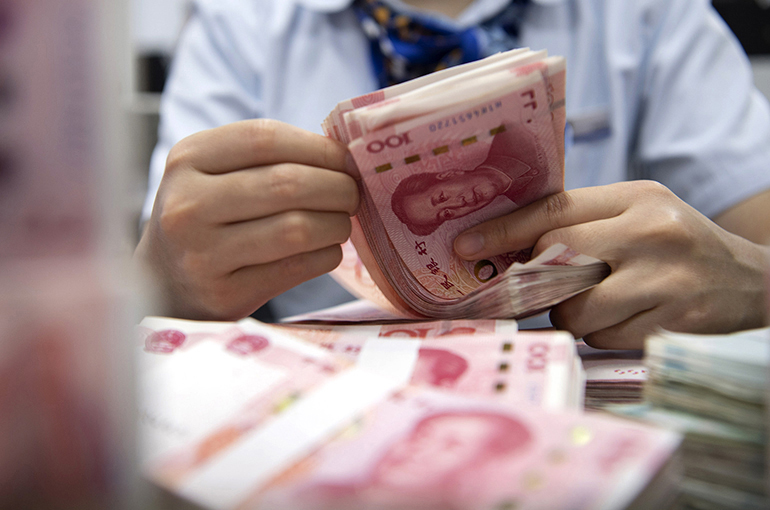
The Chinese yuan is increasingly becoming a key currency for trade and investment within Southeast Asia, challenging the region’s traditional dependence on the US dollar. This shift is driven by the U.S. imposing higher tariffs and stricter technology restrictions, which are transforming supply chains across Southeast Asia. As a result, the area is emerging as one of the most promising markets for Chinese companies expanding globally, further elevating the yuan’s role in international transactions.
It’s been five years since China and ASEAN established a comprehensive strategic partnership, and Chinese firms looking to expand abroad are transitioning from simply “going overseas” to “integrating locally,” according to multiple speakers at the ASEAN Innovation Cooperation and Development Forum held during the 2026 Zhongguancun Forum Annual Conference on March 26.
These companies are evolving from merely exporting products to developing complete industrial supply chains overseas, with sectors like artificial intelligence, the digital economy, new energy vehicles, and smart manufacturing emerging as major growth drivers.
A key topic at the forum was how artificial intelligence is empowering Chinese firms to expand internationally. There was widespread agreement on how AI is rapidly transforming the global industrial landscape in unprecedented ways.
Businesses are also increasingly emphasizing sustainability. “More companies are establishing regional fund centers in ASEAN to boost capital management efficiency,” said Xin Tao, head of wholesale and corporate banking at a Singaporean bank’s China division and president of its Beijing branch.
He added, “They’ve also shifted their mindset. ASEAN is no longer just a market for trade but now serves as a launchpad for overseas expansion and a springboard for global growth.”
This trend is supported by a robust economic and trade relationship between China and ASEAN. China has been ASEAN’s largest trading partner for 17 consecutive years, while ASEAN has been China’s biggest trading partner for six straight years. Last year, bilateral trade surpassed 1 trillion yuan (approximately USD 144.6 billion), driven by deep supply chain integration and rapid growth.
Wang Sheng, chairman of a major Chinese securities firm, highlighted three clear trends in China-ASEAN cooperation: a move from exporting individual products or services to building comprehensive industrial chains; an expansion from traditional manufacturing to emerging fields such as AI and green technology; and a shift from isolated corporate initiatives to ecosystem-driven collaborations.
The international use of the yuan is also gathering pace. Previously, less than 10% of clients opted to settle transactions in yuan, but that figure has now increased to around 30%, with another 30% interested in exploring the possibility, Xin explained.
The securities firm is leveraging its strengths in both domestic and international markets to deliver full-cycle cross-border financial services. Since last year, it has completed 71 investment banking transactions in Southeast Asia, totaling SGD 4.7 billion (about USD 3.6 billion). Its ASEAN-based international platform has become one of the leading Chinese financial entities in the region.
 ChatGPT
 Perplexity
 Gemini AI
 Grok AI